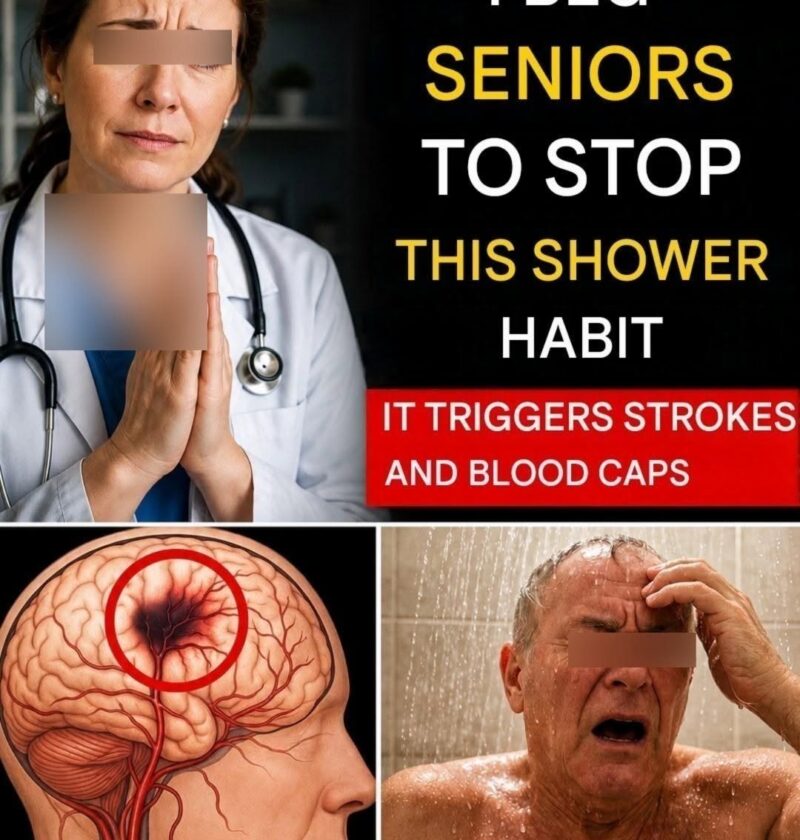
The headline “This shower habit increases the risk of stroke overnight” is written to sound alarming, but there is no strong evidence that a normal shower habit directly causes a stroke overnight. However, certain situations related to bathing may increase the risk of dizziness, falls, or sudden blood pressure changes, especially in older adults or people with heart and blood pressure problems.
Shower habits worth paying attention to
1. Very hot showers
- Hot water can widen blood vessels and temporarily lower blood pressure.
- Some people may feel dizzy or lightheaded when standing up afterward.
2. Getting up too quickly after a shower
- A sudden change from sitting/lying down to standing can cause a blood pressure drop (orthostatic hypotension), increasing fall risk.
3. Long, very hot baths or showers
- Extended heat exposure may contribute to dehydration or low blood pressure in some people.
4. Showering while dehydrated
- Dehydration can make dizziness more likely.
Stroke warning signs to know (FAST)
- F — Face: One side of the face droops.
- A — Arm: Weakness or numbness in one arm.
- S — Speech: Slurred or confused speech.
- T — Time: Call emergency services immediately if these appear.
Safer shower habits for seniors
✅ Use warm—not extremely hot—water.
✅ Stand up slowly after bathing.
✅ Use grab bars or a non-slip mat if balance is a concern.
✅ Keep the bathroom well ventilated.
✅ Discuss frequent dizziness or fainting with a healthcare professional.
A regular shower is generally safe. The bigger concern is extreme heat, sudden blood pressure changes, and fall risk, not showering itself.