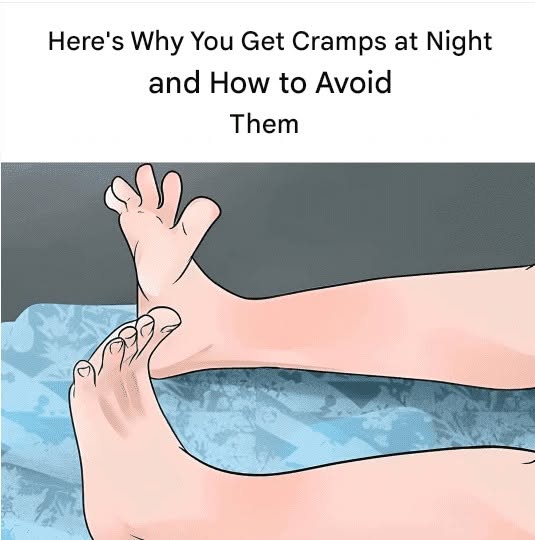
Nighttime muscle cramps—often called nocturnal leg cramps—are sudden, involuntary muscle contractions that commonly affect the calves, feet, or thighs. They can be painful and may wake you from sleep. The exact cause is not always clear, but several factors can make them more likely.
Why do we get cramps at night?
1. Muscle fatigue or overuse
- Extra activity, long periods of standing, walking, or exercise can strain muscles.
- Tired muscles may be more likely to contract suddenly.
2. Dehydration
- Low fluid levels can affect how muscles contract and relax.
- Sweating, hot weather, illness, or not drinking enough fluids may contribute.
3. Mineral and electrolyte changes
Muscles rely on minerals such as:
- Magnesium
- Potassium
- Calcium
- Sodium
An imbalance may contribute to cramps, although not all cramps are caused by low minerals.
4. Reduced circulation or nerve changes
- Aging, nerve irritation, or circulation problems can sometimes play a role.
- Conditions affecting nerves (such as diabetes-related nerve changes) may increase risk.
5. Sleeping position and muscle shortening
- Some people develop cramps when their feet are pointed downward during sleep, which can shorten calf muscles.
6. Certain medications
Some medicines may increase the likelihood of cramps in some people, including certain:
- Diuretics (“water pills”)
- Cholesterol medications
- Other medications that affect muscles or electrolytes
What to do when a cramp happens:
- Gently stretch the affected muscle.
- For a calf cramp: straighten your leg and pull your toes toward your face.
- Massage the cramped area.
- Stand up and put weight on the leg if safe.
- Apply warmth with a heating pad or warm shower.