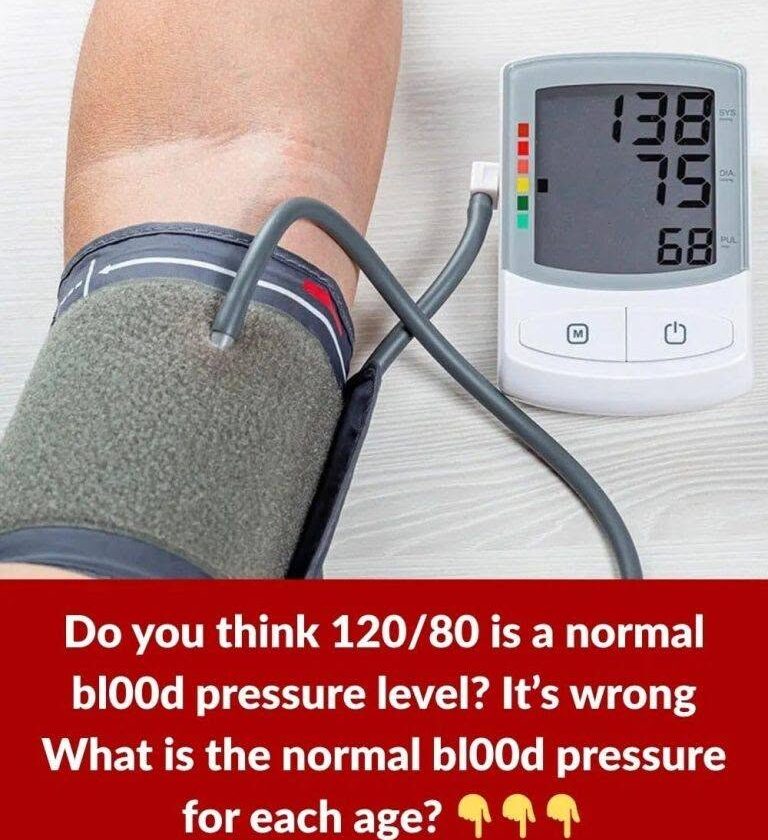
There isn’t a different “normal” blood-pressure number for every adult age. For adults, including older adults, the standard normal category is below 120/80 mmHg. Blood pressure may rise with age, but that doesn’t make a higher reading automatically normal. (www.heart.org)
Blood-pressure ranges for adults
| Reading | Category |
|---|---|
| Below 120/80 | Normal |
| 120–129 / below 80 | Elevated |
| 130–139 or 80–89 | Stage 1 hypertension |
| 140+ or 90+ | Stage 2 hypertension |
| Above 180 and/or 120 | Severe hypertension |
👴 What about people over 60 or 70?
A common misconception is that “120 + your age” is a normal blood pressure target. It isn’t. Treatment goals should be individualized based on overall health, other medical conditions, medications, and the person’s risk of cardiovascular disease. The 2025 AHA/ACC guideline continues to define normal adult BP as <120/<80. (professional.heart.org)
👶 Children are different
For children under 13, blood pressure isn’t judged using the adult chart. Doctors interpret it according to age, sex, and height. (NHLBI, NIH)
🚨 When is it an emergency?
If your reading is over 180/120 mmHg, repeat it after resting briefly. If it remains that high, seek immediate medical advice. If it is accompanied by chest pain, shortness of breath, weakness/numbness, vision changes, severe headache, or difficulty speaking, seek emergency care immediately. (www.heart.org)
For a reliable home reading, sit quietly for several minutes, keep your feet flat on the floor, support your arm at heart level, and use a properly sized upper-arm cuff. (www.heart.org)