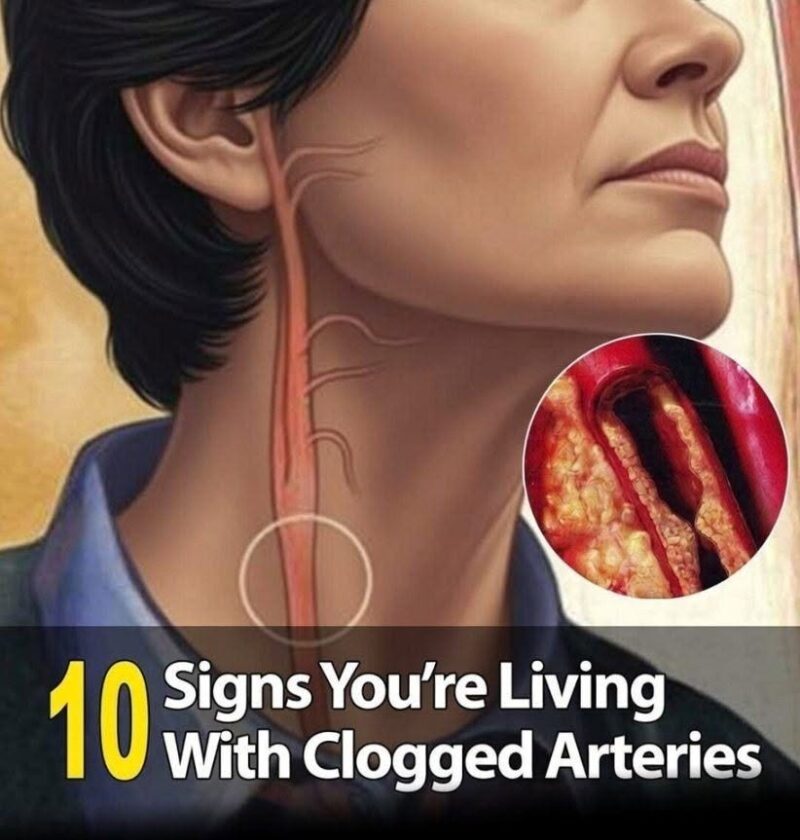
10 Indicators of Blocked Arteries You Shouldn’t Ignore
The phrase “blocked arteries” can refer to different conditions, and symptoms depend on which arteries are affected. Importantly, artery narrowing can be silent, so symptoms alone cannot diagnose a blockage. Testing is needed. (NHLBI, NIH)
10 possible warning signs
- Chest pressure, squeezing, or pain — particularly with exertion, which can occur when the heart isn’t receiving enough blood.
- Shortness of breath, especially during activity.
- Unusual fatigue or reduced exercise tolerance.
- Pain, aching, or cramping in the legs when walking that improves after resting — a classic symptom of peripheral artery disease (PAD). (NHLBI, NIH)
- Numbness, weakness, or tingling in a leg or foot.
- One foot feeling noticeably colder than the other.
- Pale, blue, or otherwise unusual skin color in a foot or leg.
- Slow-growing toenails or reduced hair growth on the legs.
- Sores on the feet or legs that heal slowly or don’t heal.
- Erectile dysfunction, which can sometimes be associated with underlying vascular disease. (www.heart.org)
⚠️ Don’t wait for symptoms
People who smoke, have diabetes, high blood pressure, high cholesterol, chronic kidney disease, or are older have higher risk of peripheral artery disease. Some people with PAD have no symptoms at all. (www.heart.org)
A clinician can evaluate suspected PAD with an examination and, commonly, an ankle-brachial index (ABI) test. (NHLBI, NIH)
🚨 Get emergency help
Sudden chest pressure/pain, severe shortness of breath, or sudden weakness/numbness or speech/vision problems can indicate a heart attack or stroke and require emergency medical attention.
Likewise, a suddenly cold, pale/blue, numb, or severely painful leg or foot can indicate an acute loss of blood flow and is an emergency. (NHLBI, NIH)
Bottom line: Don’t try to diagnose “blocked arteries” from a symptom list. Persistent or recurring symptoms deserve medical evaluation, especially if you have cardiovascular risk factors.