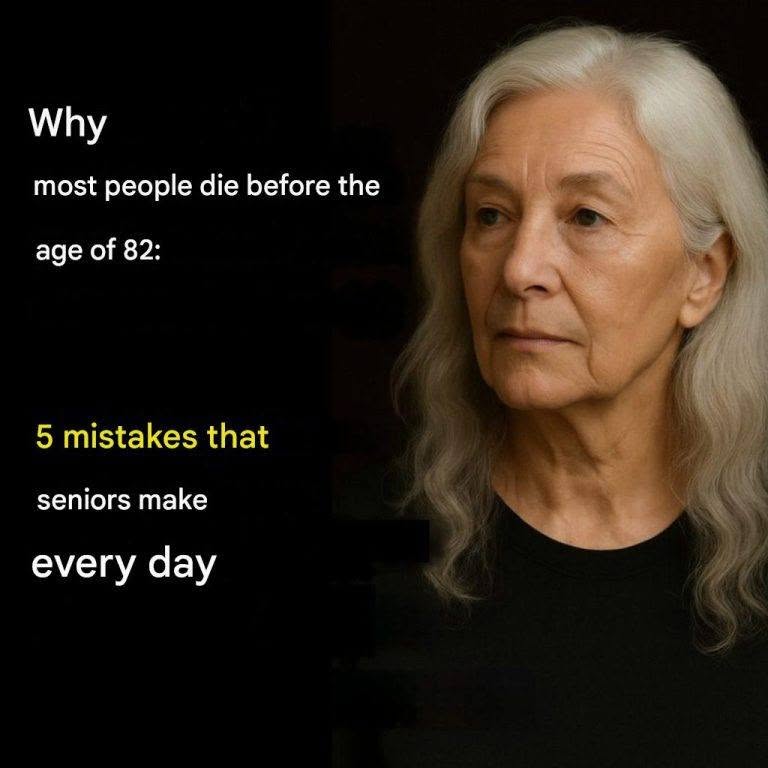
“Why Most People Die Before 82” — 5 Mistakes Older Adults Should Avoid
The headline “most people die before 82” is misleading. There is no universal age at which people should expect to die, and longevity varies greatly by country, sex, genetics, health conditions, and lifestyle.
However, there are everyday habits and risks that can seriously affect health and independence in later life.
1. Becoming too inactive
Spending most of the day sitting can lead to loss of muscle strength, poorer balance, and reduced mobility. Regular physical activity helps older adults maintain physical function and reduces fall risk. (CDC)
Better: Walk regularly and include muscle-strengthening and balance exercises appropriate for your abilities.
2. Ignoring fall risks
Falls aren’t simply an unavoidable part of aging. More than 1 in 4 adults aged 65+ fall each year, and falls can cause fractures, head injuries, loss of independence, and hospitalization. (CDC)
Better: Improve lighting, remove loose rugs and clutter, use appropriate handrails, have vision checked, and discuss balance problems with a healthcare professional.
3. Taking medications without regular review
Older adults are more likely to take multiple medications, and some medicines can cause dizziness, blurred vision, or slowed reactions, increasing the risk of falls. (CDC Stacks)
Better: Have your prescription and over-the-counter medicines reviewed periodically by a doctor or pharmacist. Don’t stop prescribed medication on your own.
4. Becoming socially isolated
Persistent social isolation is associated with poorer health outcomes and can contribute to reduced physical activity and other problems in older adults. (CDC Stacks)
Better: Maintain regular contact with family, friends, neighbors, community groups, or other social activities that you enjoy.
5. Ignoring changes in health
Don’t dismiss persistent symptoms as simply “getting old.” New breathlessness, unexplained weight loss, repeated falls, chest pain, significant weakness, confusion, or major changes in mobility deserve medical attention.
The bigger picture
There’s no magic “age 82” cutoff. A much more useful goal is to protect heart health, muscle strength, balance, mobility, mental health, and independence as you age.
And it’s never too late to become more active—CDC guidance specifically notes that older adults can gain substantial benefits from physical activity even when starting later in life. (CDC)