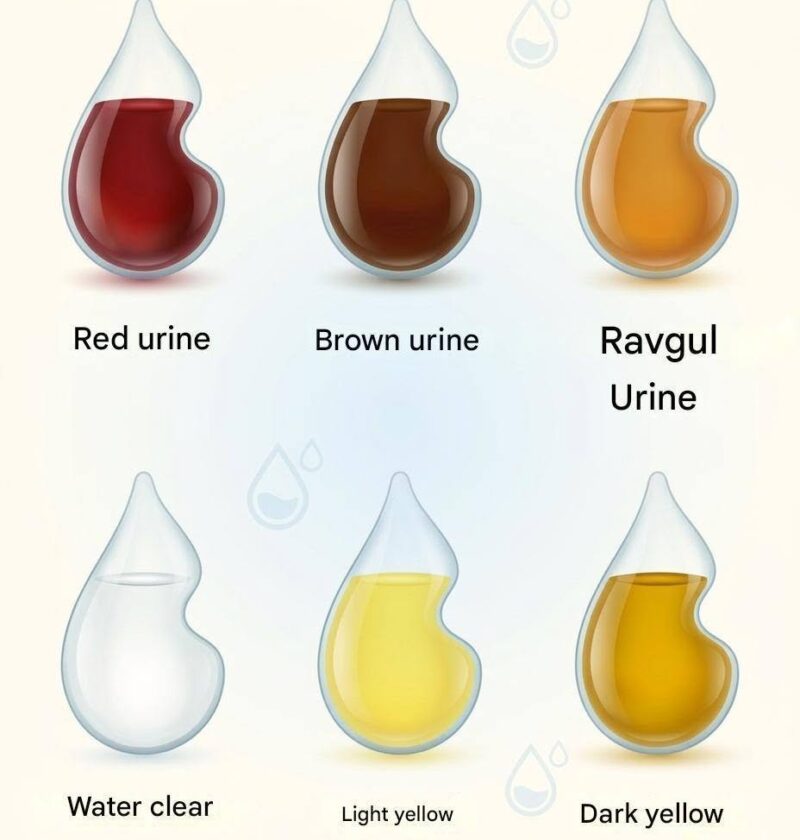
Yes—urine color can provide clues about hydration and sometimes health problems, but it cannot diagnose a disease by itself.
🟡 What different colors may mean
| Urine color | Possible meaning |
|---|---|
| Clear / very pale | Usually good hydration. Persistently crystal-clear urine may simply mean you’re drinking a lot. |
| Pale yellow | Generally normal and well hydrated. |
| Dark yellow / amber | Often indicates that urine is concentrated, commonly from not drinking enough fluids. (Mayo Clinic) |
| Orange | Can occur with dehydration, vitamins, or certain medicines; sometimes may indicate a liver or bile-duct problem, particularly with yellow skin/eyes or pale stools. (Mayo Clinic) |
| Pink / red | Can come from foods such as beetroot, but may also represent blood in the urine from infections, kidney stones, prostate problems, or other conditions. (Mayo Clinic) |
| Brown / cola-colored | Can occur with severe dehydration, certain medicines/foods, liver or kidney problems, or muscle injury after extreme exercise. (Mayo Clinic) |
| Cloudy / milky | Sometimes associated with a urinary infection or kidney stones. (Mayo Clinic) |
| Green / blue | Often caused by dyes or medications; certain infections can occasionally produce green urine. (Mayo Clinic) |
🚨 When not to ignore it
Visible blood or red/cola-colored urine should be medically evaluated, even if there is no pain. (Mayo Clinic)
Also seek medical advice for persistent unusual urine color, particularly if accompanied by burning when urinating, fever, abdominal/back pain, yellow eyes or skin, or markedly reduced urination.
And remember: urine color is only a clue. If a health problem is suspected, a urinalysis and sometimes blood tests are needed to determine the cause. (Mayo Clinic)