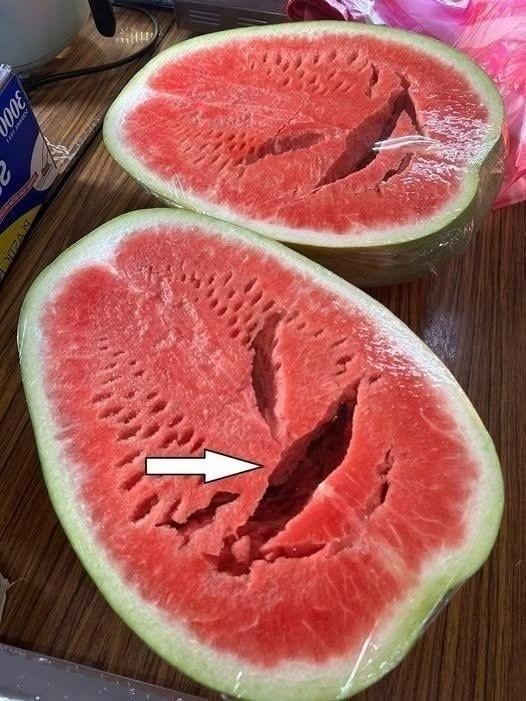
Here’s the real explanation.
Why a watermelon can have cracks inside
1. Rapid growth after uneven watering (most common)
If the plant gets dry conditions followed by heavy watering or rain, the fruit can grow too fast internally. The flesh splits slightly, creating cracks.
👉 This is a growth defect, not necessarily a safety issue.
2. High nitrogen fertilizers
Too much nitrogen can cause fast, uneven fruit expansion, leading to internal splitting or hollow areas.
3. Over-ripeness
Very ripe watermelons can develop:
- soft spots
- fibrous cracks
- grainy texture
4. Varietal traits
Some watermelon varieties naturally have:
- lighter flesh separation lines
- internal “cracking” patterns
- irregular texture
5. Heat stress during growth
Extreme heat can disrupt normal fruit development and cause internal structure changes.
When cracked watermelon IS safe to eat
It’s usually fine if:
- it smells normal (sweet, fresh)
- no sour or fermented odor
- no slime or mold
- flesh is still firm and juicy
- no unusual discoloration (gray, brown, or black patches)
Internal cracks alone are usually just a cosmetic or texture issue.
When you SHOULD NOT eat it
Discard the watermelon if you notice:
- sour or alcoholic smell (fermentation)
- mushy or watery breakdown
- mold (white, green, or black growth)
- bitter or “off” taste
- leaking or sticky texture
These can indicate spoilage or bacterial growth.
The truth behind the viral claim
Posts saying “STOP eating immediately if you see cracks” are exaggerated. They mix:
- harmless growth defects
with - actual spoilage signs
Bottom line
Cracks inside a watermelon usually mean:
👉 uneven growth or ripening
not automatic danger
But always check smell, texture, and taste before eating.
If you want, I can show you how to pick a perfect watermelon before buying it so you avoid these surprises altogether.