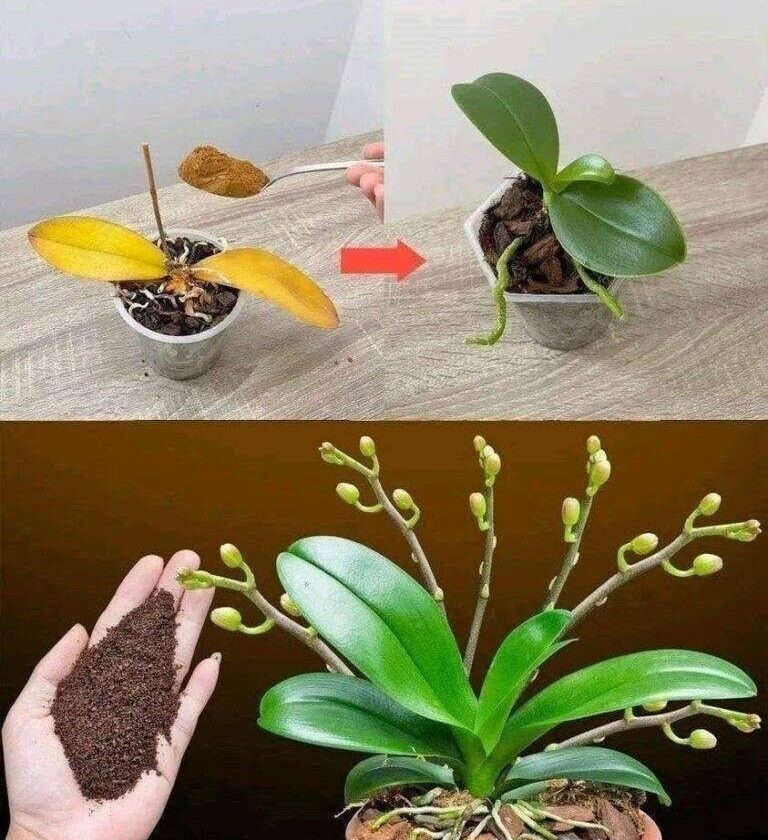
Here’s a more credible version that keeps the viral gardening hook without promising a “miracle” ingredient:
🌸 JUST ONE TEASPOON — AND MY ORCHID STARTED BLOOMING AGAIN!
Before you add a random kitchen ingredient to your orchid, there’s something important to know: there is no magic teaspoon that guarantees an orchid will suddenly produce lots of flowers.
But if your orchid isn’t blooming, a few simple changes can make a big difference.
🌿 1. CHECK THE LIGHT
Orchids generally need bright, indirect light. Too little light is a common reason they produce leaves but few flowers.
💧 2. DON’T OVERWATER
Let the growing medium approach dryness before watering again, depending on the orchid and potting mix. Never leave the roots sitting in stagnant water.
🪴 3. USE THE RIGHT POTTING MIX
Many common orchids, such as Phalaenopsis, are better suited to a loose, well-draining orchid mix rather than ordinary garden soil.
🌱 4. FEED LIGHTLY
During active growth, use a fertilizer formulated for orchids and follow the label directions. More fertilizer doesn’t mean more flowers and excessive fertilizer can damage roots.
🌡️ 5. GIVE IT A SUITABLE ENVIRONMENT
Stable temperatures, adequate humidity, good air circulation, and appropriate light all contribute to healthy growth.
🌸 6. BE PATIENT
Even a healthy orchid won’t flower continuously. After blooming, it may need time to grow new leaves and roots before producing another flower spike.
⚠️ WHAT ABOUT THE “ONE-TEASPOON” HACK?
You may see recipes recommending sugar, baking soda, rice water, cinnamon, or other household ingredients. These aren’t universal bloom boosters, and applying the wrong substance can harm the plant or roots.
The real secret isn’t a magic teaspoon—it’s giving your orchid the conditions it needs to bloom naturally. 🌸
Have you ever managed to get an orchid to bloom again?