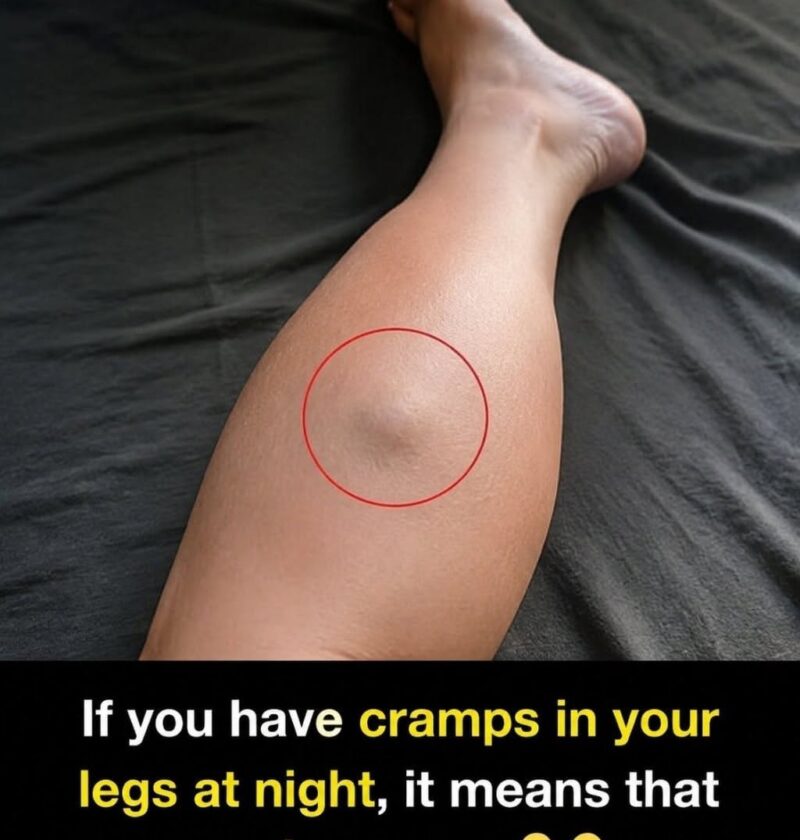
Nighttime leg cramps are common and usually harmless, but they can be painful enough to wake you suddenly. Often there is no single identifiable cause; tired muscles and changes in nerve function may play a role. (Mayo Clinic)
🌙 Why Do You Get Leg Cramps at Night? 8 Possible Triggers
1. 💧 Not drinking enough fluids
Dehydration can contribute to muscle cramps, particularly after sweating or physical activity. Staying adequately hydrated throughout the day may help. (Mayo Clinic)
2. 🏃 Overworked or tired muscles
A hard workout, prolonged standing, or suddenly doing more physical activity than usual can leave muscles fatigued and more prone to cramping. (Mayo Clinic)
3. 🧘 Not stretching regularly
Tight or poorly conditioned muscles may be more susceptible to cramps. Gentle calf stretching, particularly before bed, may reduce nighttime episodes for some people. (nhs.uk)
4. 💊 Certain medications
Some medicines—including diuretics and certain cholesterol-lowering medicines—can be associated with leg cramps. Don’t stop a prescribed medication without discussing it with your clinician. (nhs.uk)
5. 🤰 Pregnancy
Leg cramps are particularly common during pregnancy, especially later in pregnancy. (Mayo Clinic)
6. 🩸 Nerve or circulation problems
Conditions affecting nerves or blood flow, including diabetic neuropathy and peripheral artery disease, can sometimes cause cramping. (Mayo Clinic)
7. 🧂 Mineral or electrolyte problems
Abnormal levels of minerals such as potassium, calcium, or magnesium can contribute to muscle cramps in some circumstances. But don’t automatically assume that every nighttime cramp means you need a magnesium supplement. (Mayo Clinic)
8. 👵 Getting older
Nighttime leg cramps become more common with age, partly because muscle mass and conditioning can decline over time. (Mayo Clinic)
🦵 What to do when a cramp strikes
For a calf cramp, straighten the leg and gently pull your toes toward your face. Standing and putting weight on the affected leg, gentle massage, or a warm shower may also help. (nhs.uk)
🌿 Habits that may help prevent them
- Stretch your calves gently before bed.
- Stay adequately hydrated.
- Avoid suddenly increasing exercise intensity.
- Limit excessive alcohol and caffeine.
- Try a few minutes of gentle walking or stationary cycling before bedtime.
- Keep bedding loose around your feet rather than forcing the toes downward. (Mayo Clinic)
🩺 When should you get checked?
Talk with a healthcare professional if cramps regularly disturb your sleep, last longer than about 10 minutes, are accompanied by leg swelling or numbness, or occur with muscle weakness. (nhs.uk)
Bottom line: Nighttime cramps aren’t automatically a sign of magnesium deficiency or a serious disease. Start with gentle stretching, adequate hydration, and regular activity, but persistent or unusual cramps deserve an evaluation for an underlying cause.