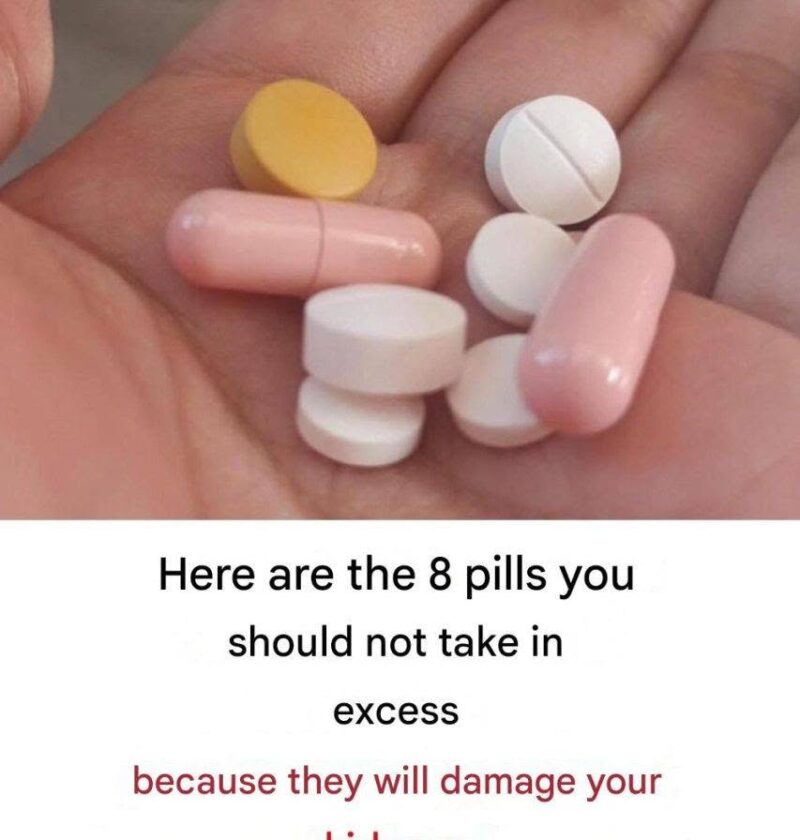
The headline “Eight pills you shouldn’t take because they damage your kidneys” is misleading. There isn’t a universal list of eight medicines that everyone should avoid. Kidney risk depends on the drug, dose, duration, kidney function, hydration, and other medicines being taken. Some medicines actually protect the kidneys. (National Kidney Foundation)
💊 Medicines that deserve kidney caution
- Ibuprofen — an NSAID that can reduce kidney blood flow, especially with high doses, prolonged use, dehydration, or existing kidney disease.
- Naproxen — another NSAID with similar risks.
- Diclofenac — an NSAID that can affect kidney function, particularly with prolonged use.
- Meloxicam — another NSAID requiring caution in people with kidney problems.
- Celecoxib — also an NSAID; kidney risks still apply.
- High-dose aspirin — doses above 325 mg/day can have NSAID-like effects on the kidneys. Low-dose aspirin prescribed for heart protection is different and should not be stopped without medical advice. (National Kidney Foundation)
- Certain antibiotics — some can cause kidney injury, while others primarily require dose adjustment when kidney function is reduced.
- Lithium and certain other medicines — long-term lithium treatment can affect kidney function, and several other drugs require monitoring or dose adjustments in kidney disease. (National Kidney Foundation)
⚠️ One important correction
Don’t stop prescribed medication because of a social-media list. For example, ACE inhibitors and ARBs can actually protect the kidneys and heart in appropriate patients, even though kidney function and potassium sometimes need monitoring. (National Kidney Foundation)
The biggest everyday concern is often regular NSAID use, particularly if you have chronic kidney disease, heart disease, high blood pressure, dehydration, or take an ACE inhibitor/ARB or diuretic. (National Kidney Foundation)
Bottom line: There aren’t simply “eight pills that destroy your kidneys.” The safer approach is to review your actual medication list and kidney function (eGFR) with a doctor or pharmacist.
If you give me the eight pill names from the post, I can check each one and mark it 🟢 generally okay, 🟡 needs caution, or 🔴 potentially harmful to the kidneys.