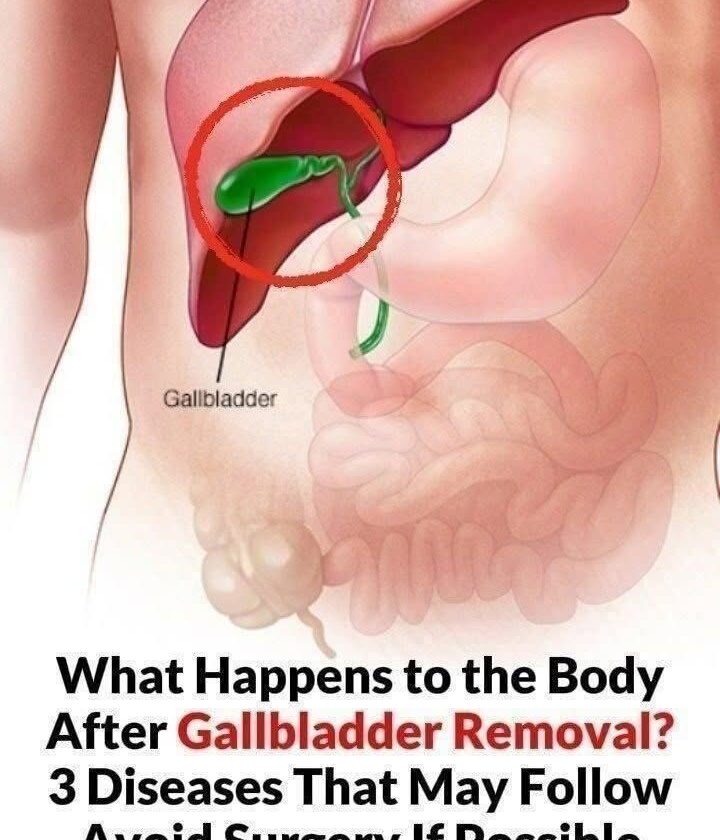
The headline “After Gallbladder Removal: 3 Conditions You Could Develop — Why You Should Avoid the Surgery When Possible” contains a grain of truth but is misleading. Gallbladder removal (cholecystectomy) is generally considered a common and safe operation, and whether you should have it depends on why surgery has been recommended. (nhs.uk)
What can happen after gallbladder removal?
Three issues that doctors may encounter are:
- Diarrhea or bile-acid diarrhea
Without a gallbladder, bile flows continuously from the liver into the intestine instead of being stored and released with meals. A small proportion of people develop softer or more frequent stools; some develop persistent bile-acid diarrhea, which can usually be treated. (NIDDK) - Persistent abdominal symptoms
Some people continue to experience abdominal pain, indigestion, bloating, nausea or reflux after surgery. This is sometimes called post-cholecystectomy syndrome. Importantly, persistent symptoms don’t necessarily mean the surgery caused a new disease—sometimes the original symptoms had another cause. (nhs.uk) - Surgical complications
Like any operation, cholecystectomy carries risks, including infection, bleeding, blood clots, bile leakage, retained stones and—rarely—injury to the bile ducts or nearby organs. Serious complications are uncommon. (nhs.uk)
🚫 Should you avoid gallbladder surgery whenever possible?
No—not as a general rule.
If you have silent gallstones that aren’t causing symptoms, treatment often isn’t necessary. (NIDDK)
But when gallstones are causing repeated painful attacks, inflammation, bile-duct blockage, jaundice, or other complications, removing the gallbladder can prevent further problems and is often the standard treatment. (nhs.uk)
The gallbladder isn’t an essential organ. After removal, the liver continues to make bile, and most people can eventually eat a normal, healthy diet and digest food normally. (NIDDK)
Bottom line
Don’t avoid gallbladder surgery simply because you’ve heard that everyone develops problems afterward. The better question is: Are your gallstones actually causing symptoms or complications, and does the expected benefit of surgery outweigh its risks in your particular case?
If you tell me your age, ultrasound findings, symptoms, and whether your doctor has recommended surgery, I can explain what those findings generally mean and what questions to ask the surgeon.