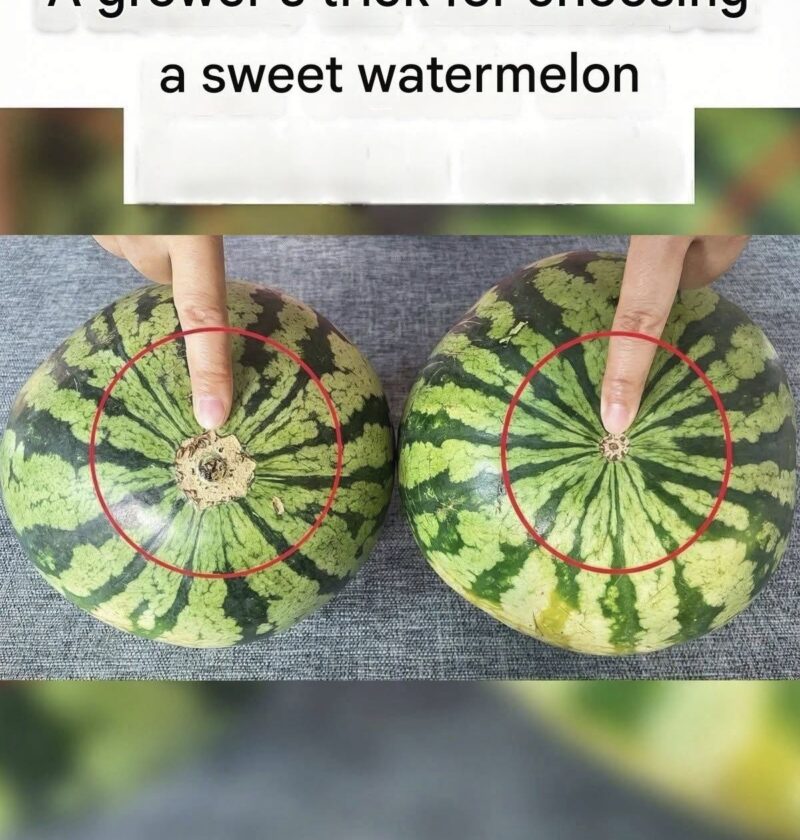
🍉 No More Bland Watermelons: How to Pick a Sweeter, Ripe One
There isn’t a 100% foolproof visual test for sweetness, because sweetness varies by variety and growing conditions. But you can greatly improve your odds by checking several clues together. (Union County Center)
1. Look for a creamy-yellow “field spot” ⭐
This is probably the best external clue for ripeness.
Turn the watermelon over and look for the patch where it rested on the ground. Look for a creamy yellow, buttery or straw-colored spot rather than a white or greenish one. (Union County Center)
2. Pick the heavier one
Compare several watermelons of roughly the same size. Choose the one that feels heavier for its size—this generally indicates plenty of water and a juicy fruit. (High Plains Journal)
3. Look for a dull rather than shiny rind
A dull-looking rind is commonly associated with a more mature watermelon, while a very shiny rind can indicate that it was harvested earlier. (Cucurbit Breeding)
4. Check the stem/tendril when visible
If you can see the stem or the little curly tendril near where the fruit grew, brown and dry is a useful maturity clue; green suggests the fruit may have been harvested earlier. (NC Agriculture Blog)
5. Don’t put too much faith in the “knock test”
You’ll often hear that a sweet watermelon should make a deep, hollow sound. It can provide some information about maturity, but recent extension guidance cautions that sound varies with watermelon variety and rind characteristics, so it shouldn’t be your main test. (Auburn University College of Agriculture)
6. Ignore the “sugar spot” myth
Brown webbing or marks on the rind may look convincing, but they aren’t a reliable measurement of sugar content. Likewise, stripe patterns are largely determined by variety rather than sweetness. (Auburn University College of Agriculture)
🍉 The simple shopping formula
Creamy-yellow field spot + heavy for its size + mature/dull rind + no soft or damaged areas = a good bet.
And remember: watermelons don’t continue ripening significantly after they’re harvested, so choosing a mature fruit at the market matters. (Cucurbit Breeding)
Bottom line: If you only remember one trick, turn the watermelon over and look for a substantial creamy-yellow field spot. Combine that with weight and overall condition for the best chance of taking home a juicy, flavorful melon.