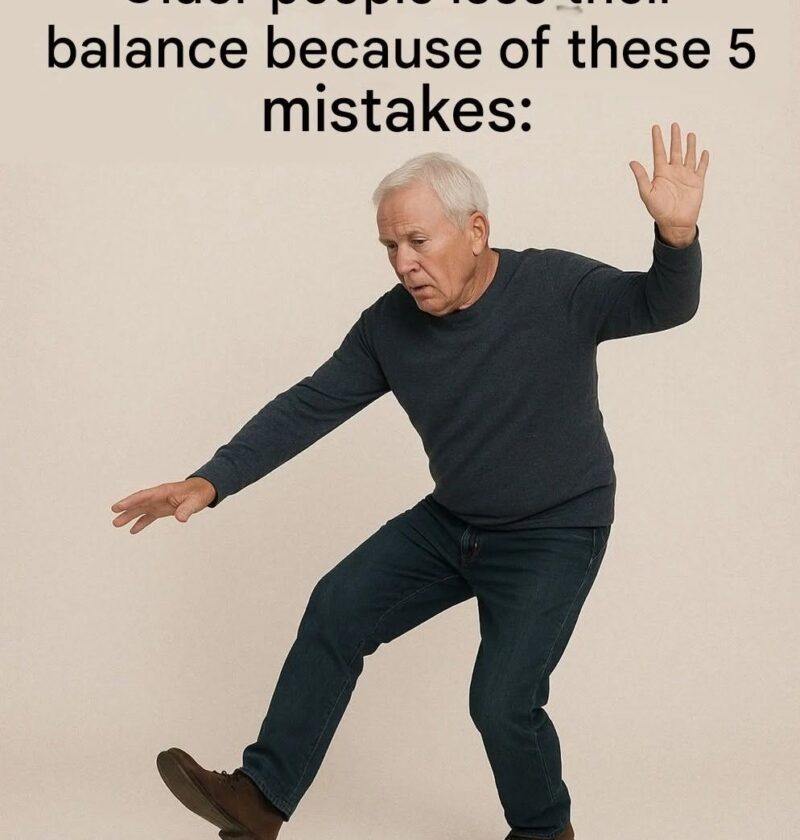
🚶 5 Common Mistakes That Can Cause Older Adults to Lose Their Balance
Balance naturally changes with age, but falls are not an inevitable part of getting older. Several everyday habits and health issues can increase fall risk—and many can be addressed.
1. 🛋️ Being too inactive
Avoiding movement can gradually reduce leg strength, balance and coordination. Regular strength and balance exercises can help maintain mobility and independence.
2. 💊 Ignoring medication side effects
Some medicines can cause dizziness, drowsiness, blurred vision or slower reactions. Taking several medications can increase the likelihood of side effects. Have your medicines reviewed periodically by a doctor or pharmacist—but don’t stop prescribed medication on your own.
3. 👓 Putting off an eye examination
Poor vision can make it harder to detect obstacles, judge steps and maintain safe movement. Regular vision checks and appropriately prescribed glasses can reduce one important contributor to falls.
4. 👟 Wearing unsafe footwear
Loose-fitting shoes, slippery or worn soles, and footwear that doesn’t hold the foot securely can make walking less stable. Shoes with a firm, supportive sole and good grip are generally safer.
5. 🏠 Leaving hazards around the home
Loose rugs, clutter, poor lighting, missing stair rails and slippery bathroom surfaces can turn a small balance problem into a fall. Making the home safer is an important fall-prevention measure.
⭐ One more important warning sign
If someone suddenly develops balance problems, particularly together with facial drooping, arm weakness, speech difficulty, severe dizziness or vision changes, don’t assume it’s ordinary aging. Sudden loss of balance can be a sign of stroke and requires emergency medical attention