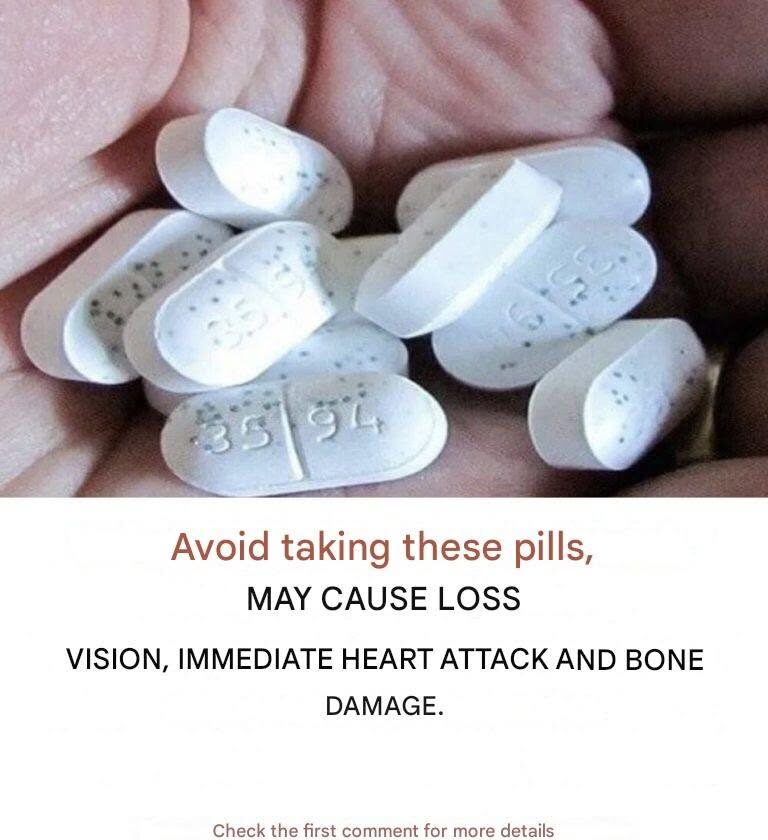
⚠️ “These Tablets Can Cause Blood Clots, Thrombosis and Heart Attacks” — What’s the Truth?
That headline is too vague to be safe. Several different medicines can affect cardiovascular or clotting risk, but the risk depends on the specific drug, dose, duration, and the person’s health.
💊 One important example: NSAID painkillers
Non-aspirin NSAIDs such as ibuprofen, naproxen and diclofenac can increase the risk of serious cardiovascular thrombotic events, including heart attack and stroke. The FDA says the risk can occur early in treatment and may increase with higher doses or longer use. (U.S. Food and Drug Administration)
That doesn’t mean everyone taking an NSAID will develop a clot. These medicines can be appropriate when used at the lowest effective dose for the shortest appropriate period.
🩸 Another important group: estrogen-containing contraceptives
Combined hormonal contraceptives can increase the risk of venous blood clots, and rare serious events such as heart attack and stroke can occur. (U.S. Food and Drug Administration)
Risk is particularly important to discuss when someone has additional risk factors such as smoking, certain migraine patterns, previous clots or cardiovascular disease.
❗ Don’t stop medication because of a viral warning
Some medicines that sound frightening in a headline may actually prevent heart attacks or clot-related strokes in the right patients. For example, aspirin can reduce clot-related cardiovascular events in certain people, although it also carries important bleeding risks. (U.S. Food and Drug Administration)
If you send me the name of the tablet—or a photo of the package—I can tell you exactly whether it has a recognized risk of blood clots, heart attack or stroke, who is most vulnerable, and whether the claim is accurate.