🦶 9 Symptoms in Your Feet That Shouldn’t Be Ignored
Your feet can sometimes reveal problems involving nerves, circulation, blood sugar, or infection. But there isn’t one disease that causes all nine symptoms, and a foot symptom by itself doesn’t diagnose a serious condition.
9 signs to pay attention to
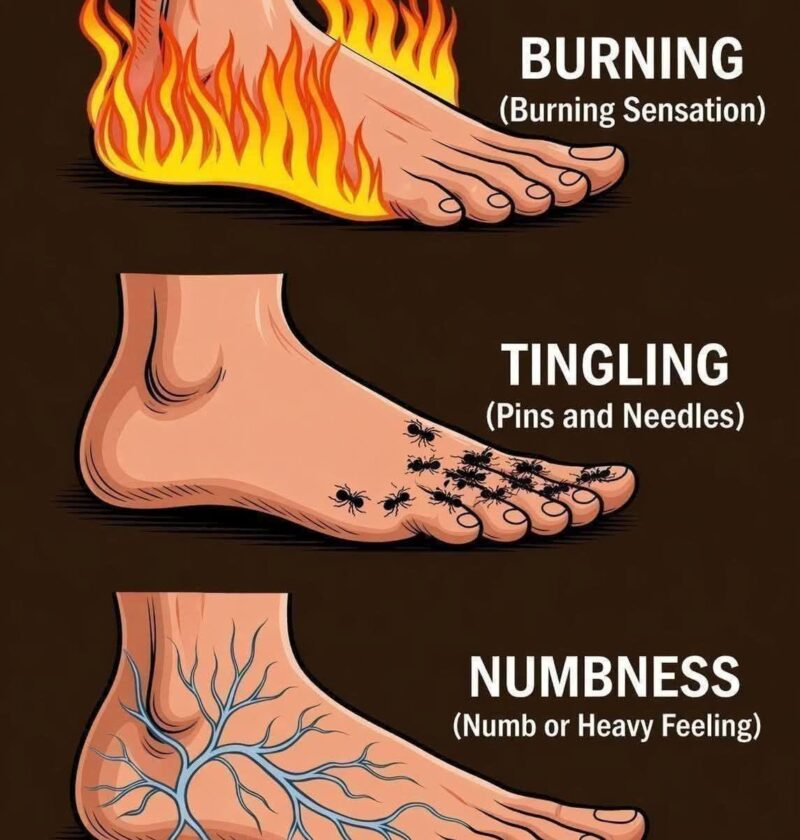
- Tingling or “pins and needles” — can occur with nerve problems, including diabetic peripheral neuropathy.
- Burning or unusual pain — may also be related to nerve irritation.
- Numbness or reduced sensation — particularly important if you have diabetes because injuries may go unnoticed.
- A foot that feels unusually cold — especially when one foot is colder than the other, which can occur with poor arterial circulation.
- Pale, blue, or unusually dark skin — changes in foot color can indicate circulation problems.
- Sores that heal slowly or don’t heal — can occur when blood flow is inadequate and are particularly concerning in people with diabetes.
- Hair loss on the toes or lower legs — can be associated with peripheral artery disease (PAD).
- Pain or cramping when walking that improves with rest — a classic symptom of PAD. (NHLBI, NIH)
- Swelling, redness, warmth, or pus around a wound — may indicate an infection requiring medical attention. (NHLBI, NIH)
🩺 Don’t assume it’s “just aging”
Several of these symptoms can have relatively harmless explanations, while others can signal diabetes-related nerve damage or peripheral artery disease. PAD is important because it reflects disease in the blood vessels and is associated with increased cardiovascular risk. (NHLBI, NIH)
If these symptoms persist, particularly numbness, recurrent foot wounds, walking-related pain, or unexplained color/temperature changes, arrange a medical evaluation.
🚨 One situation is an emergency
If a foot suddenly becomes very cold, pale or blue, numb, extremely painful, or difficult/impossible to move, seek emergency medical care immediately. A sudden loss of blood flow to a limb can be limb-threatening. (NHLBI, NIH)
Bottom line: Your feet can provide useful clues, but they cannot tell you exactly what’s wrong. Persistent or unexplained changes deserve a proper examination—especially if you have diabetes, smoke, or have cardiovascular risk factors.