🍉 Cut Open a Watermelon and Found Cracks? Don’t Panic
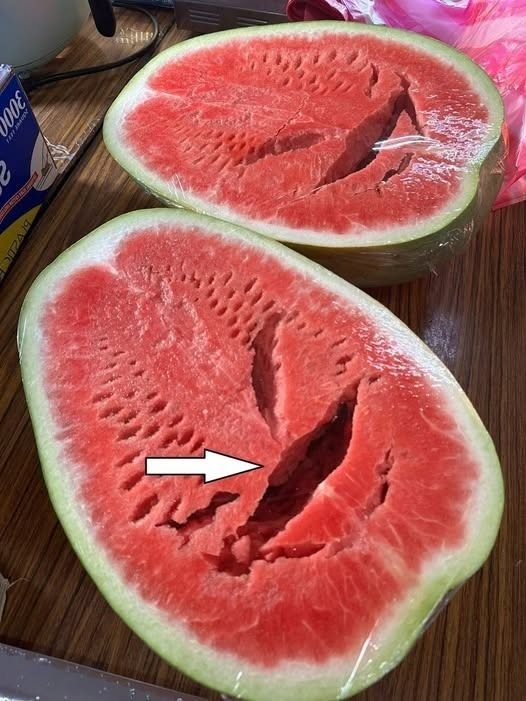
If you cut open a watermelon and see cracks, gaps, or a hollow-looking center, you don’t necessarily need to throw it away.
This condition is commonly called “hollow heart.” It is a physiological defect that can develop because of growing conditions, including problems with pollination and environmental stress. It is not evidence that the watermelon contains a dangerous chemical or that it is diseased. (Watermelon Board)
Is it safe to eat?
Usually, yes. The National Watermelon Promotion Board specifically says watermelons with hollow heart are safe to eat. The flesh around the cracks may even taste sweeter because sugars can become concentrated there. (Watermelon Board)
🚫 When should you throw it away?
The cracks themselves aren’t the problem. Don’t eat the watermelon if you see signs of spoilage, such as:
- Mold
- Foul or fermented smell
- Slimy flesh
- Unusual mushiness or extensive decay
- Significant discoloration associated with spoilage
Also, if the outer rind is badly damaged or soft, that’s different from a harmless internal hollow-heart defect. USDA grading guidance distinguishes hollow heart from conditions such as decay and water-soaked soft spots. (AMS)
🍉 One viral claim to ignore
You may have seen posts claiming that cracks prove the watermelon was treated with a dangerous growth chemical. Internal cracking by itself does not establish that. Experts have specifically disputed that claim. (Lead Stories)
Bottom line: A cracked or hollow center can look alarming, but “hollow heart” is generally a quality/appearance issue, not a food-safety warning. Judge the watermelon by its overall freshness and signs of spoilage—not by the presence of internal cracks alone.