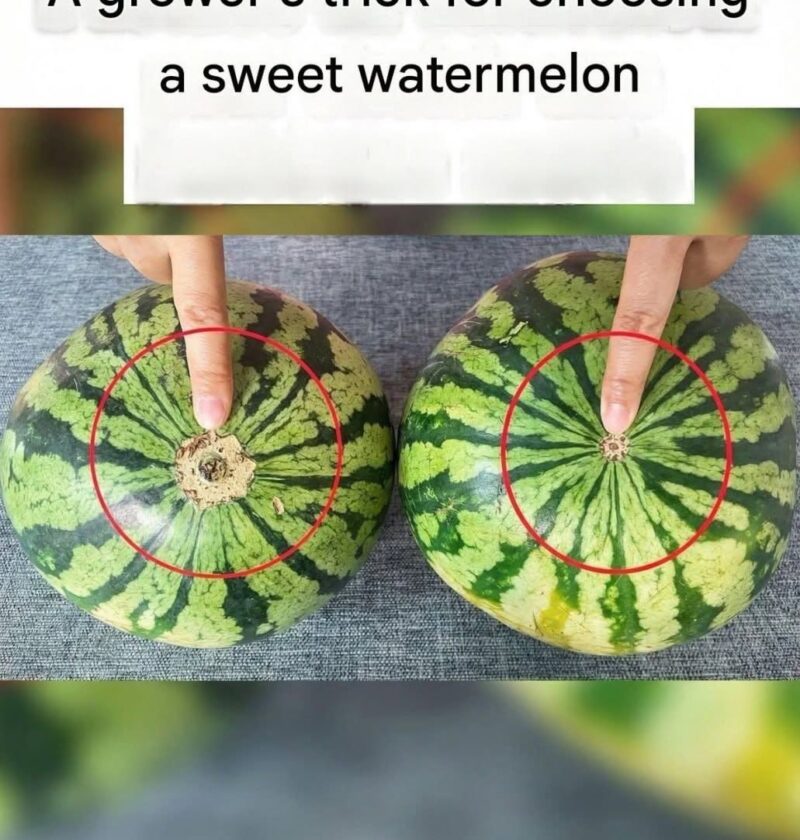
🍉 How to Pick a Sweet, Ripe Watermelon
There isn’t a 100% foolproof visual test for sweetness, but a few signs can improve your odds when you’re choosing a whole watermelon.
👀 Look for these clues
- Large creamy-yellow field spot
Look for the patch where the watermelon rested on the ground. A yellow or creamy-orange spot generally indicates it spent enough time ripening on the vine. A very pale white spot may indicate less ripeness. - Dull rather than shiny skin
A ripe watermelon often has a more matte, slightly dull appearance. Very glossy skin can be a sign that it’s not fully ripe. - Strong, well-defined stripes
Look for clearly contrasting green stripes, although stripe patterns vary by variety and aren’t a guarantee of sweetness. - Heavy for its size
Pick up several similarly sized melons. The one that feels heaviest for its size is likely to contain more water and may be a good choice. - A dry, brown stem—when visible
A dried stem can be consistent with a watermelon that was allowed to mature before harvest. However, stem appearance alone isn’t a reliable measure of sweetness.
🔊 What about tapping it?
The popular “listen for a deep, hollow sound” trick isn’t a scientifically reliable way to determine sweetness. You can use it as a personal preference, but weight and the ground spot are more useful practical clues.
🚫 Avoid
Skip melons with soft or sunken areas, cracks, bruises, mold, leaking juice, or damaged skin.
Bottom line: For your best chance of getting a sweet watermelon, choose one that is heavy for its size and has a substantial creamy-yellow field spot, with no signs of damage. And remember: sweetness ultimately depends on the variety and growing conditions, so no visual trick can guarantee it.