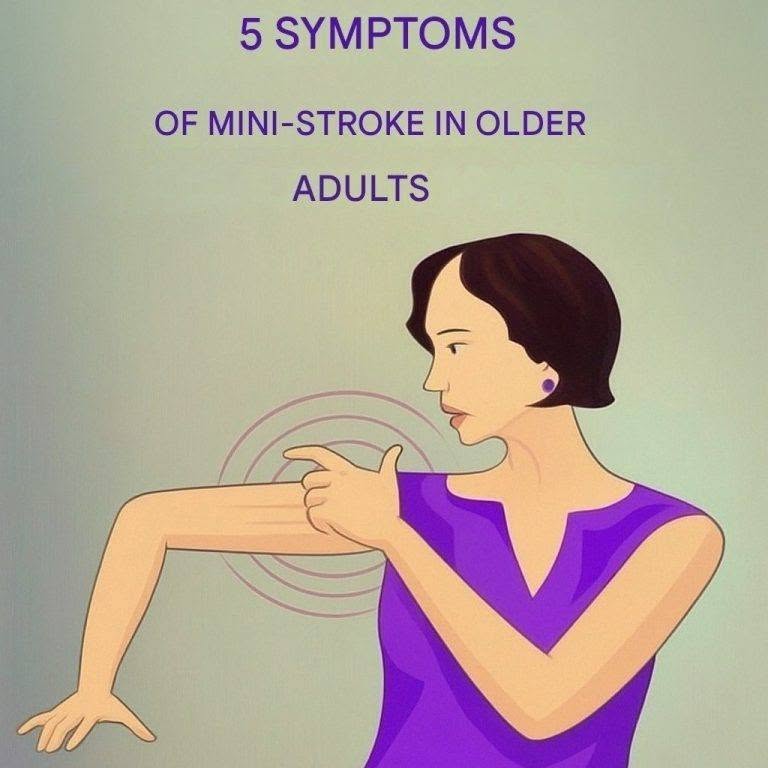
🚨 5 Symptoms of a “Mini-Stroke” in Seniors That Shouldn’t Be Ignored
A “mini-stroke” usually refers to a transient ischemic attack (TIA). Its symptoms can look just like a stroke but may disappear after minutes or hours. That does not make a TIA harmless—it can be an important warning of a future stroke. (NINDS)
1. 😕 Sudden weakness or numbness
Especially in the face, arm, or leg on one side of the body.
2. 🗣️ Sudden trouble speaking
Slurred speech, difficulty finding words, confusion, or trouble understanding what someone is saying can be a warning sign.
3. 👁️ Sudden vision changes
Sudden loss or blurring of vision in one or both eyes—or temporary loss of vision in one eye—should be taken seriously.
4. ⚖️ Sudden dizziness or loss of balance
New difficulty walking, coordination problems, or unexplained dizziness can occur with a TIA or stroke.
5. 🤕 Sudden severe headache
A sudden, unusually severe headache without an obvious cause can be a stroke warning sign, particularly when accompanied by other neurological symptoms. (NINDS)
⏱️ Don’t wait for it to pass
The biggest mistake is thinking, “It went away, so I’m fine.” A TIA can be brief, but it signals an underlying vascular problem that requires urgent medical assessment. (NINDS)
Remember B.E. F.A.S.T.:
- B — Balance problems
- E — Eye/vision changes
- F — Face drooping
- A — Arm weakness
- S — Speech difficulty
- T — Time to call emergency services
If any of these symptoms start suddenly—even if they disappear—seek emergency medical care immediately. Don’t drive yourself or wait for a doctor’s appointment. (stacks.cdc.gov)
Bottom line: There isn’t a special set of symptoms unique to seniors or to “mini-strokes.” Sudden neurological symptoms should be treated as a potential stroke/TIA until a medical professional determines otherwise.