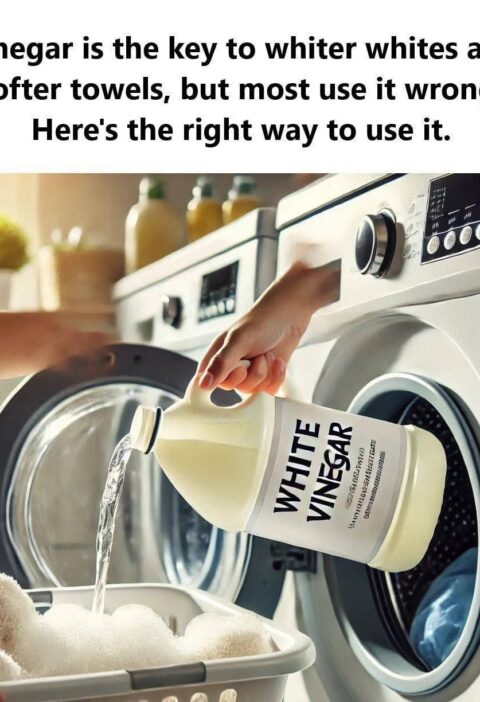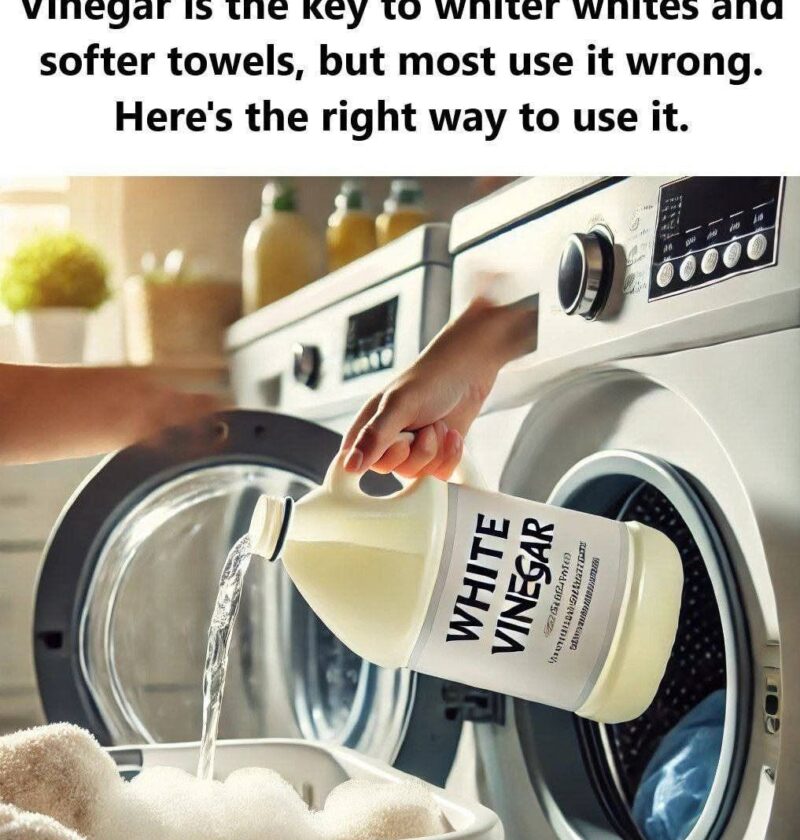
Yes—white vinegar can be useful in laundry, but it isn’t a magic whitener, and using it incorrectly can damage clothes or your washing machine.
🧺 How to use vinegar correctly
For softer towels:
Add about ½ cup (120 mL) of distilled white vinegar to the washing machine’s fabric-softener dispenser, rather than pouring it directly onto clothes. It can help remove detergent and mineral residue that makes towels feel stiff.
For whites:
Vinegar can help remove detergent/mineral buildup and odors, which may make whites look fresher. But it doesn’t bleach fabric in the way oxygen bleach or chlorine bleach does.
⚠️ The important mistakes to avoid
- Never mix vinegar with chlorine bleach. The combination can produce dangerous chlorine gas.
- Don’t combine vinegar with commercial laundry products unless the product instructions specifically say it’s compatible.
- Don’t use vinegar as a substitute for detergent—it doesn’t remove normal body oils and dirt effectively.
- If your washing-machine manufacturer advises against vinegar, follow the manufacturer’s instructions.
For really white whites
For stubborn yellowing or stains, a laundry oxygen bleach designed for whites is generally more effective than vinegar. Follow the product’s label and check that it’s suitable for the fabric.
And for towels, avoid using too much detergent and fabric softener—residue buildup is one of the main reasons towels lose their absorbency and softness.
Bottom line: Vinegar is best thought of as a rinse-stage deodorizing/residue-removing aid, not a whitening bleach.