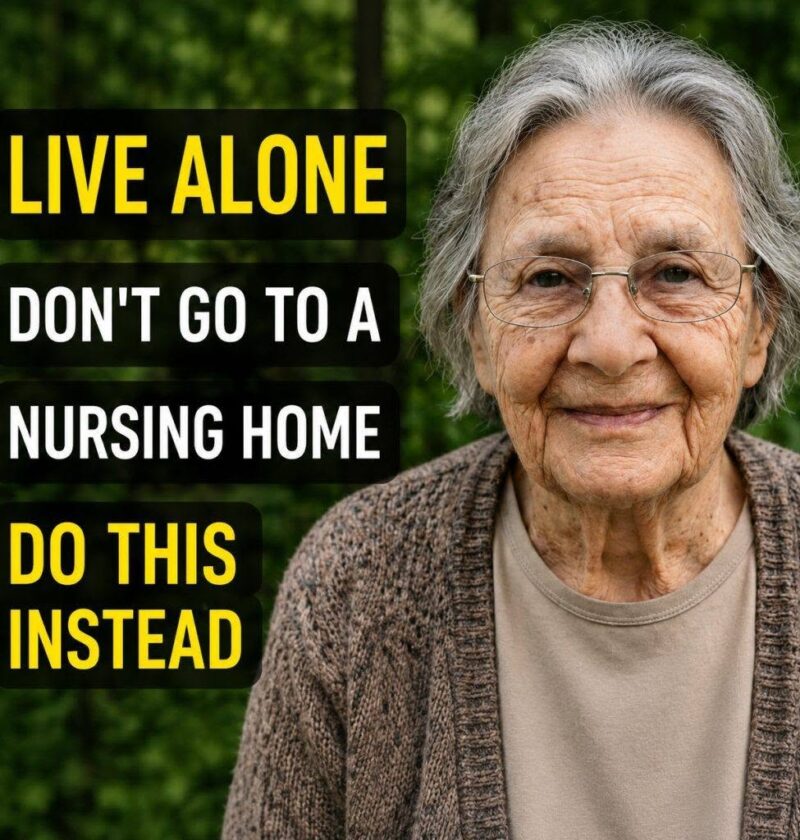
I’m 83: What Are the Alternatives to a Nursing Home if I Can’t Safely Live Alone?
Being 83 does not automatically mean you need a nursing home. The right choice depends on how much help you need with bathing, dressing, eating, medications, walking, toileting, and medical care. (National Institute on Aging)
1. 🏠 Stay at home with paid help
This can work if you are safe at home but need assistance. A caregiver can help with meals, bathing, dressing, housekeeping, shopping and companionship. You can combine family help with professional caregivers. (National Institute on Aging)
2. 👨👩👧 Move in with family
A spare bedroom or an adapted part of a relative’s home can provide supervision while allowing you to remain part of the household.
A small accessory dwelling unit (ADU) near a family member’s home can also provide more independence while keeping help close by. (Business Insider)
3. 🏡 Small residential care or group home
A board-and-care/adult family home can feel more like a regular home than a large nursing facility. These smaller settings can provide meals, personal care and around-the-clock staff, although the amount of nursing care varies. (National Institute on Aging)
4. 🏢 Assisted living
Assisted living is designed for people who cannot manage completely independently but don’t require the intensive medical care of a nursing home. Services commonly include meals, medication assistance, housekeeping, personal care and supervision. (National Institute on Aging)
5. ☀️ Adult day care + help at home
If you can safely spend nights at home, an adult day program can provide meals, activities, supervision and sometimes therapy or transportation during the day. It can be combined with a home caregiver. (AAFP)
6. 🩺 PACE or similar community programs
In the United States, PACE (Program of All-Inclusive Care for the Elderly) combines medical care, rehabilitation, transportation, adult day services and home support for eligible older adults who can remain safely in the community. Availability and eligibility vary by location. (AAFP)
7. 🌿 Continuing-care communities
A continuing-care retirement community can provide independent living initially, followed by assisted living and, when necessary, skilled nursing care on the same campus. This can reduce the need to move repeatedly as care needs change. (National Institute on Aging)
The most important question: What kind of help do you actually need?
A geriatric assessment can evaluate your mobility, balance, medications, cognition, nutrition, medical conditions and ability to perform everyday activities. That assessment can help determine whether home care, assisted living, a small residential home, or nursing care is appropriate. (WTOP News)
Don’t choose a nursing home simply because you can’t live completely alone. There may be a middle ground that provides substantial assistance while preserving more independence.
If you tell me what country and city you live in and what help you need (for example, bathing, walking, meals, medications, or being alone at night), I can outline the most realistic options and how to find them.