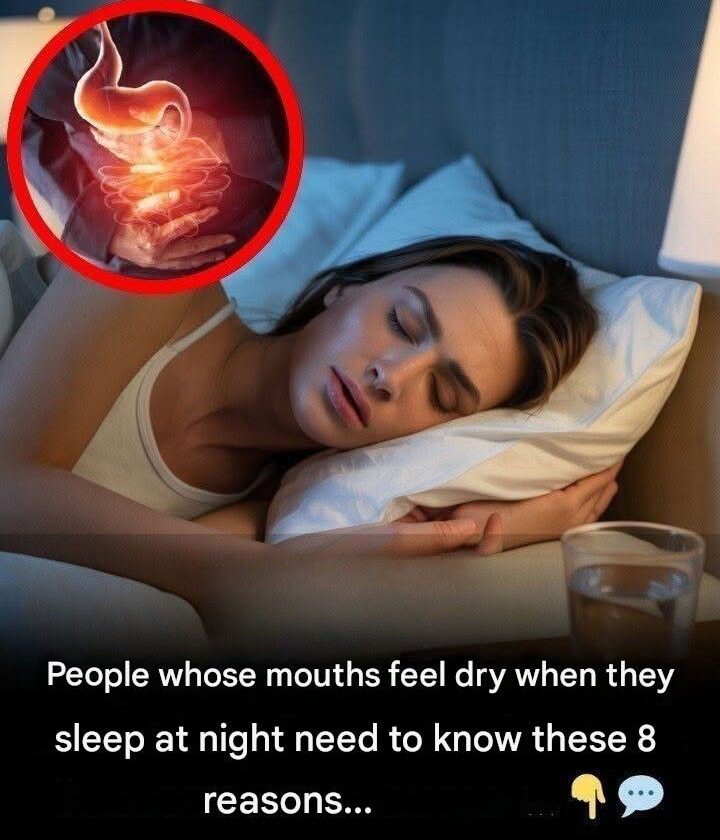
8 Reasons Your Mouth Feels Dry at Night
Waking up with a dry or sticky mouth is common and usually isn’t a sign of something serious. However, persistent dry mouth can increase the risk of tooth decay, gum problems and oral infections.
1. 👄 Breathing through your mouth
A blocked nose, allergies, snoring or simply sleeping with your mouth open can dry out your mouth overnight.
2. 💊 Medications
Hundreds of medications can reduce saliva. Common examples include some medicines for high blood pressure, depression and anxiety, as well as antihistamines, decongestants, muscle relaxants and certain pain medicines.
Don’t stop a prescribed medicine on your own. Ask your doctor or pharmacist whether it could be contributing to the problem.
3. 💧 Dehydration
Not drinking enough fluids, heavy sweating or illness can contribute to nighttime dryness.
4. 😴 Sleep apnea
Waking with a dry mouth can occur with sleep apnea. If you also have loud snoring, witnessed pauses in breathing, gasping during sleep, morning headaches or significant daytime sleepiness, talk to a healthcare professional.
5. ☕ Alcohol and caffeine
Alcohol and caffeinated drinks can worsen dryness in some people. Smoking and tobacco can also contribute.
6. 🩺 Diabetes
Persistent dry mouth can sometimes occur with diabetes, particularly when accompanied by frequent urination and increased thirst.
7. Autoimmune conditions
Conditions such as Sjögren syndrome can interfere with saliva production and often cause dry eyes as well as dry mouth.
8. Reduced saliva production with age or other health problems
Dry mouth becomes more common with aging, although aging itself isn’t necessarily the direct cause. Long-term illnesses, nerve problems and some medical treatments can reduce saliva production