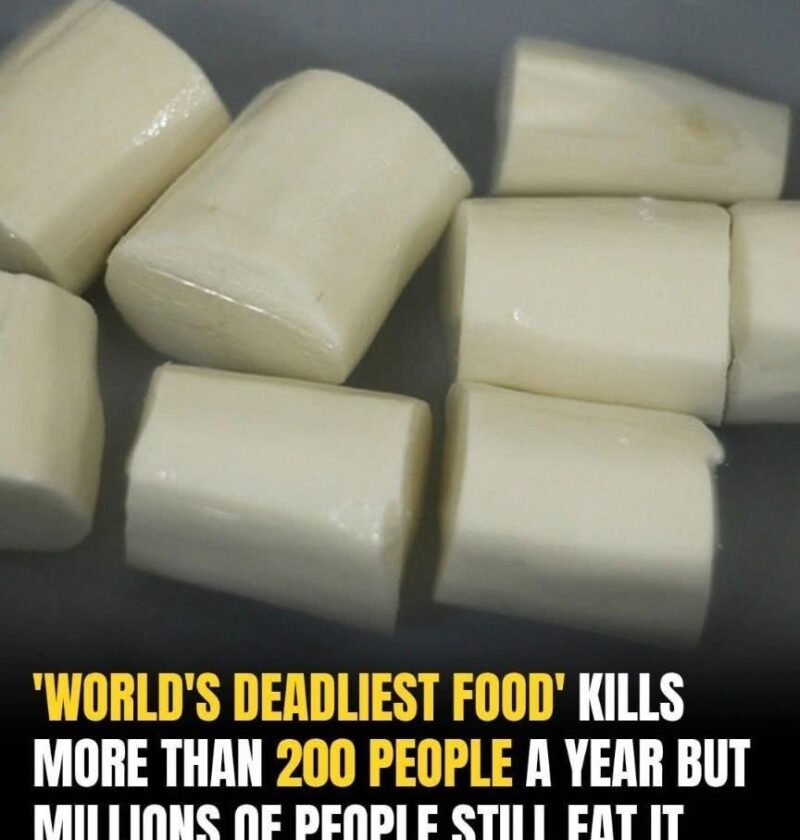
The “world’s deadliest food” is probably cassava (yuca/manioc)
The headline is referring to cassava, a major staple food eaten by hundreds of millions of people. The “deadliest food” label is sensationalized, however: properly processed cassava is an important and generally safe food. The danger comes primarily from eating it raw or inadequately processed.
☠️ Why can cassava be poisonous?
Cassava naturally contains cyanogenic glycosides, particularly linamarin. When the plant is damaged or improperly processed, these compounds can release hydrogen cyanide, which can cause cyanide poisoning. Severe poisoning can result in seizures, loss of consciousness and death.
There is also a longer-term risk called konzo, a neurological disorder associated with prolonged exposure to inadequately processed, high-cyanide cassava. It can cause irreversible weakness and paralysis of the legs.
🍠 Does that mean you shouldn’t eat cassava?
No. Cassava is a major source of calories in tropical regions because it’s drought-resistant and can grow in relatively poor soils. That’s why so many people depend on it.
The crucial point is proper preparation. Depending on the variety and the food being made, traditional processing can include:
- Peeling
- Grating or cutting
- Soaking or fermenting
- Drying
- Thorough cooking
These processes substantially reduce cyanogenic compounds. Commercial cassava products such as properly processed tapioca are not equivalent to raw cassava root.
⚠️ The “200 deaths vs. 500 million people” claim
The figures circulating online should be treated cautiously. Multiple articles repeat the ~200 deaths per year and ~500 million consumers figures, but the headline turns those numbers into a much more frightening impression than they warrant. The risk isn’t that cassava routinely kills people; it’s that improper processing can cause serious poisoning.