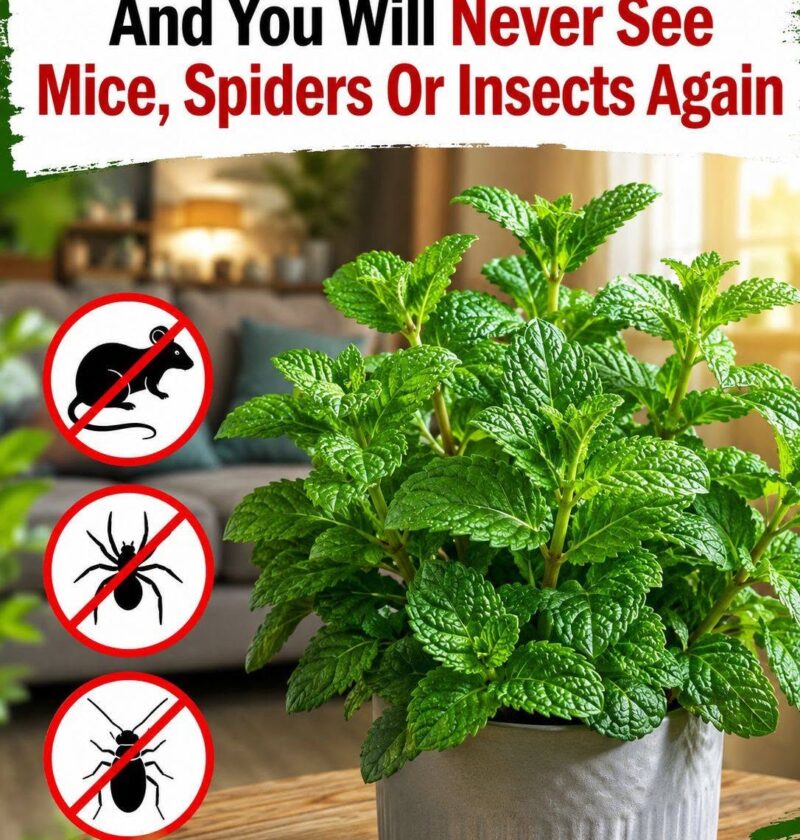
8 Plants That Help Repel Mice, Spiders & Other Insects
Many gardeners and homeowners look for natural ways to discourage pests without relying heavily on chemical sprays. While no plant can guarantee a pest-free home, certain aromatic plants may help make an area less attractive to insects and, in some cases, rodents. Their strong scents can interfere with how pests find food, shelter, or mates.
Here are eight plants commonly associated with natural pest control.
1. Mint
Mint
Mint has a strong fragrance that many people enjoy but that some insects and rodents appear to dislike.
May help deter:
- Ants
- Mosquitoes
- Mice (limited evidence)
Tip: Plant mint in containers because it can spread aggressively.
2. Lavender
Lavender
Lavender is valued for its pleasant scent and attractive flowers.
May help deter:
- Moths
- Fleas
- Mosquitoes
It also attracts beneficial pollinators such as bees.
3. Rosemary
Rosemary
Rosemary contains aromatic oils that may discourage certain insects.
May help deter:
- Mosquitoes
- Cabbage moths
- Some garden pests
4. Basil
Basil
Basil is a popular kitchen herb and may offer some pest-repelling benefits.
May help deter:
- Mosquitoes
- Houseflies
Growing basil near doors or windows is a common gardening practice.
5. Marigolds
Marigold
Marigolds are often planted around vegetable gardens.
May help deter:
- Aphids
- Whiteflies
- Some soil-dwelling pests
Their strong scent is believed to contribute to their protective effect.
6. Chrysanthemums
Chrysanthemum
Chrysanthemums contain compounds called pyrethrins, which are used in some insect-control products.
May help deter:
- Ants
- Roaches
- Ticks
- Fleas
7. Lemongrass
Lemongrass
Lemongrass contains compounds related to citronella.
May help deter:
- Mosquitoes
It thrives in warm climates and can be grown in large pots.
8. Catnip
Catnip
Catnip contains a compound called nepetalactone.
May help deter:
- Mosquitoes
- Certain flies
Be aware that neighborhood cats may become very interested in it.
What About Spiders and Mice?
The evidence for plants directly repelling spiders and mice is limited. Strong-smelling herbs such as mint, lavender, and rosemary are often mentioned in traditional home-remedy guides, but they should not be considered reliable pest-control solutions on their own.
For persistent pest problems, it’s more effective to:
- Seal entry points
- Remove food sources
- Reduce clutter
- Maintain clean indoor and outdoor spaces
The Bottom Line
Plants can be a useful part of a broader pest-management strategy. Herbs and flowers such as mint, lavender, rosemary, basil, marigolds, chrysanthemums, lemongrass, and catnip may help discourage certain insects while adding beauty and fragrance to your home or garden.
However, no plant can guarantee complete protection from mice, spiders, or insects. Combining good