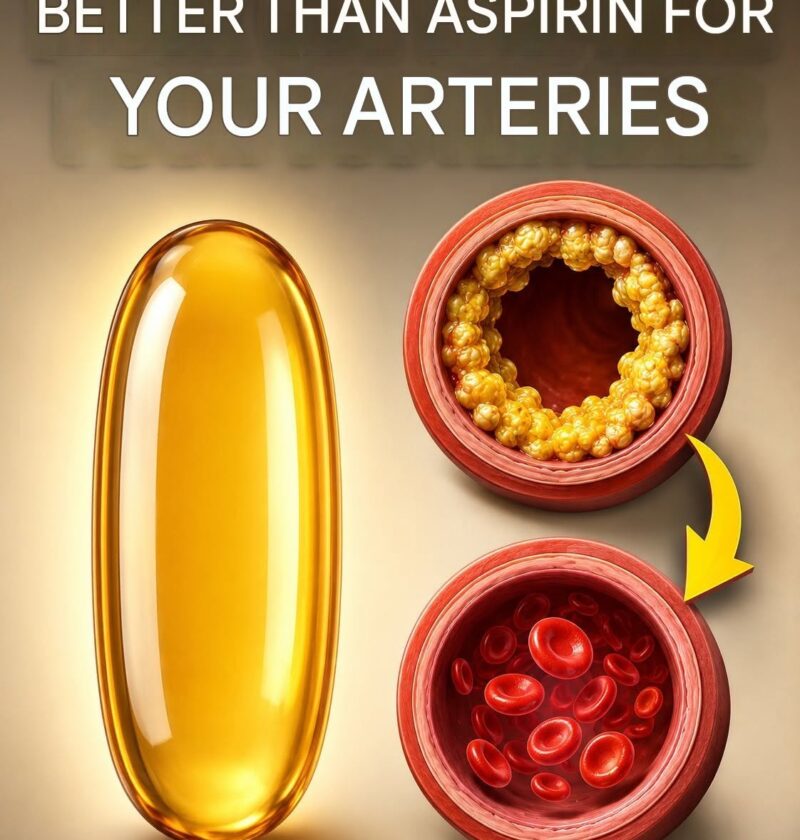
“A natural alternative to aspirin that cleanses arteries and prevents clots” — is this true?
No proven natural food or supplement can replace aspirin, “cleanse” blocked arteries, and prevent blood clots without risks. This is a common—and potentially dangerous—health claim.
Aspirin itself isn’t routinely recommended for everyone. Current cardiovascular guidance says it should be used selectively for primary prevention because its potential benefit has to be weighed against bleeding risk; it generally isn’t used routinely for primary prevention in adults over 70.
P
professional.heart.org
+1
What actually protects your arteries?
The evidence supports a combination of:
🥦 A heart-healthy diet rich in vegetables, fruits, whole grains, legumes, nuts and healthy protein sources.
🚶 Regular physical activity—generally at least 150 minutes of moderate activity per week.
🚭 Not smoking.
🩸 Controlling blood pressure, cholesterol and blood sugar.
💊 Taking prescribed cholesterol-lowering or other cardiovascular medication when indicated.
P
professional.heart.org
+1
A healthy diet can reduce cardiovascular risk, but it doesn’t dissolve existing arterial plaque overnight. Likewise, garlic, ginger, turmeric, lemon water, fish oil or other supplements shouldn’t be presented as substitutes for proven antiplatelet or cholesterol treatments. The AHA specifically notes that dietary supplements haven’t demonstrated a reliable reduction in cardiovascular events in people with chronic coronary disease.
P
professional.heart.org
⚠️ Don’t stop aspirin on your own
If a doctor prescribed aspirin because you’ve had a heart attack, stroke, stent, bypass surgery, or established coronary disease, don’t replace it with a “natural blood thinner” without speaking with your clinician. The appropriate antiplatelet treatment depends on your individual risk.
Bottom line: There is no 100%-natural artery cleanser or clot-prevention substitute for medically indicated treatment. Food, exercise and risk-factor control are powerful—but they’re complementary to, not magical replacements for, evidence-based cardiovascular care.
P
Sources