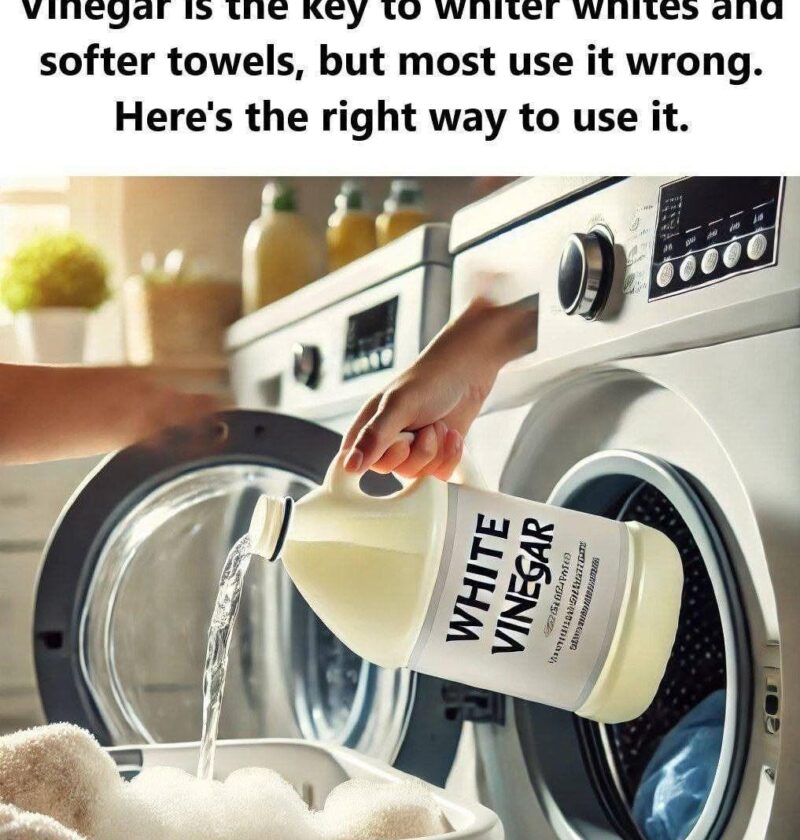
Vinegar: the key to whiter whites and softer towels? Here’s the right way.
The viral claim has some truth—but vinegar isn’t a miracle whitening or softening agent. Its most useful laundry application is helping remove mineral and detergent buildup, particularly from stiff towels.
C
Clorox™
+1
🧺 For stiff or musty towels
If your towels feel rough or aren’t absorbing water well, buildup from hard water and detergent may be contributing. A 5% white distilled vinegar soak can help dissolve that buildup and improve feel and absorbency.
C
Clorox™
A simple approach:
Check the towel’s care label.
Use plain white distilled vinegar.
Soak the towels when appropriate for the fabric.
Rinse thoroughly.
Wash normally with the correct amount of laundry detergent.
Dry completely.
👕 Will vinegar make whites whiter?
Not particularly well. Vinegar may help remove buildup that makes fabric look dull, but proper whitening products are substantially more effective for stains and whitening.
C
Clorox™
⚠️ The mistake you should avoid
Don’t routinely pour vinegar directly into your washing machine. Whirlpool and Maytag warn that vinegar’s acidity can damage rubber seals, hoses and other components over time. They recommend using manufacturer-approved products for the washer itself.
W
Whirlpool
+1
Also:
NEVER mix vinegar with chlorine bleach. The combination can release toxic chlorine gas.
W
Whirlpool
What actually keeps towels soft and absorbent?
Don’t overload the machine.
Use the recommended amount of detergent—too much can leave residue.
Avoid fabric softener on towels because it can reduce their absorbency.
Wash according to the care label and dry them thoroughly.
C
Clorox™
+1
Bottom line: Vinegar can be a useful occasional soak for buildup and odors, but it’s not a replacement for detergent and isn’t the best tool for whitening. And despite the viral advice, putting vinegar in every washing-machine load isn’t a good idea for many machines.
C
W
Sources