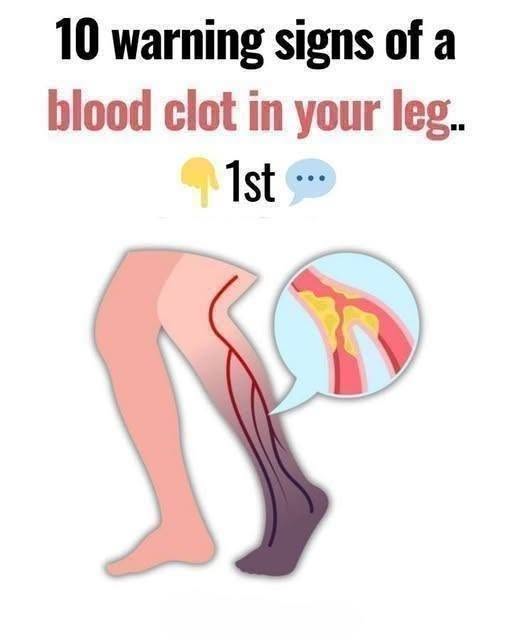
10 Warning Signs of a Blood Clot in the Leg
A blood clot in a deep vein is called deep vein thrombosis (DVT). It can be serious because part of the clot can travel to the lungs and cause a pulmonary embolism.
C
CDC
+1
Possible warning signs include:
Swelling in one leg, particularly if it develops suddenly.
Pain or tenderness without an obvious injury.
Calf or thigh aching that doesn’t have a clear explanation.
Unusual warmth over part of the leg.
Redness or darker discoloration of the skin.
A feeling of heaviness or tightness in the affected leg.
Swelling that persists or gets worse, rather than resolving normally.
Noticeable difference between the two legs in swelling, warmth, or color.
Pain when standing or walking, particularly when accompanied by swelling.
No symptoms at all — some DVTs don’t produce obvious symptoms, so risk factors are important too.
C
CDC Stacks
+1
🚨 Know the emergency signs
If a clot travels to the lungs, symptoms can include sudden difficulty breathing, chest pain that worsens with deep breathing or coughing, coughing up blood, a rapid or irregular heartbeat, severe lightheadedness, or fainting. These require immediate emergency medical attention.
C
CDC
+1
Risk is higher after recent surgery or hospitalization, prolonged immobility or long travel, previous blood clots, cancer, certain hormone treatments, pregnancy/postpartum, injury, obesity, smoking, or a family history of clots.
C
CDC
+1
Don’t try to diagnose a DVT by massaging the leg or testing it yourself. If you develop unexplained one-sided swelling, pain, warmth, or redness—especially if you have risk factors—seek prompt medical evaluation. A healthcare professional may use an ultrasound to determine whether a clot is present.
C
CDC
C
C
Sources