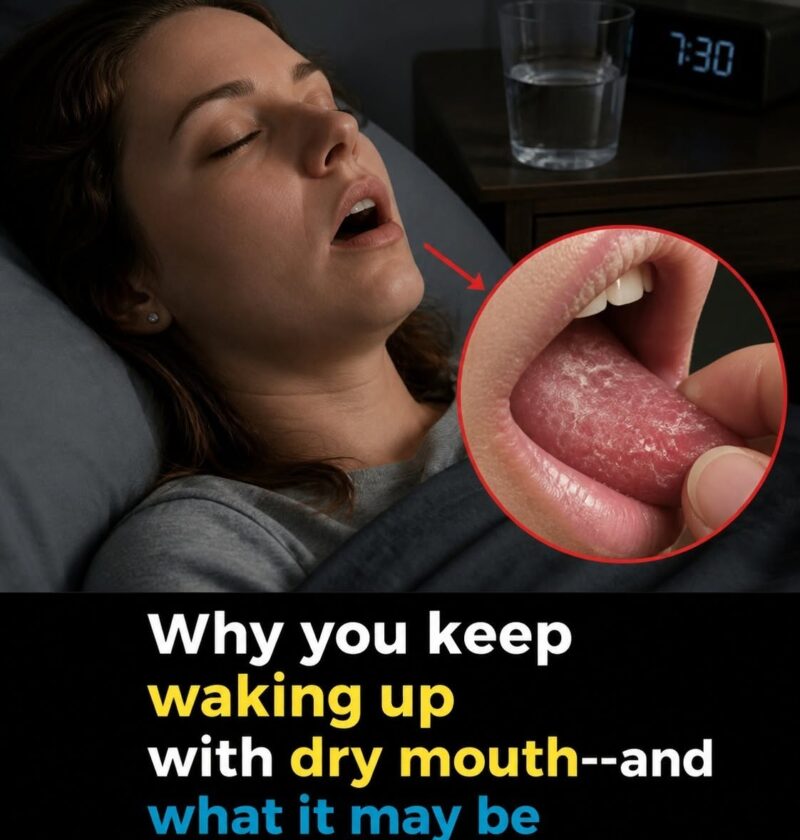
Waking Up With a Dry Mouth? Here’s What Your Body Might Be Telling You
Waking up with a dry mouth occasionally is common and often isn’t a cause for concern. However, if it happens frequently, it may be a sign of an underlying issue that can affect your comfort and oral health.
1. Mouth Breathing
Sleeping with your mouth open—often due to nasal congestion, allergies, or a deviated septum—can dry out your mouth overnight.
2. Dehydration
Not drinking enough fluids during the day, heavy sweating, or illness can reduce saliva production and lead to a dry mouth.
3. Medications
Many medications can cause dry mouth, including some used to treat:
- High blood pressure
- Allergies
- Depression and anxiety
- Overactive bladder
If you think a medication is causing dry mouth, don’t stop taking it without talking to your healthcare provider.
4. Snoring or Sleep Apnea
People who snore or have obstructive sleep apnea may breathe through their mouths during sleep, leading to morning dryness.
If you also have loud snoring, gasping during sleep, or excessive daytime sleepiness, it’s worth discussing these symptoms with a healthcare provider.
5. Medical Conditions
Dry mouth can be associated with conditions such as:
- Diabetes
- Autoimmune disorders (such as Sjögren’s syndrome)
- Certain neurological conditions
A healthcare professional can help determine whether further evaluation is needed.
What You Can Do
- Drink enough water throughout the day.
- Avoid excessive alcohol, which can contribute to dehydration.
- Use a humidifier if your bedroom air is very dry.
- Practice good oral hygiene.
- If you breathe through your mouth because of nasal congestion, treating the underlying cause may help.
Sugar-free gum or lozenges can also stimulate saliva production during the day.
When to See a Healthcare Professional
Make an appointment if:
- Dry mouth occurs most mornings for several weeks.
- You have difficulty swallowing or speaking.
- You develop frequent cavities, mouth sores, or bad breath.
- You also have excessive thirst, frequent urination, o