You Cut Open a Watermelon and Saw Cracks? Here’s What It Actually Means
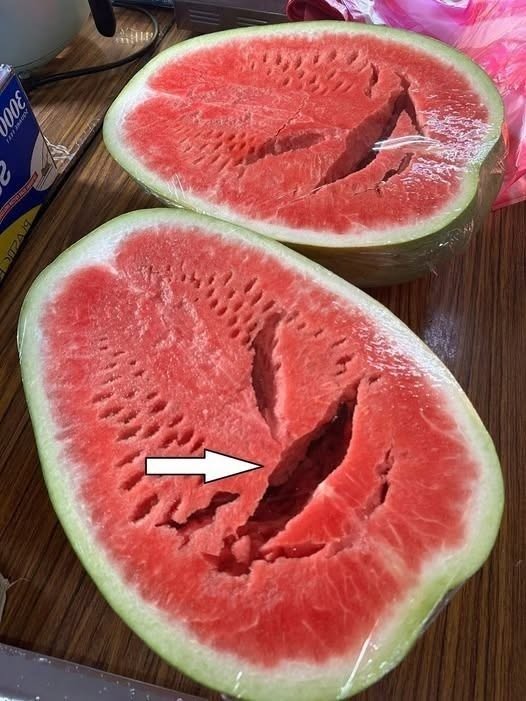
Seeing cracks or unusual lines inside a watermelon can be surprising, and online posts often say things like “stop eating it immediately.” However, the reality is more nuanced. Cracks inside a watermelon do not always mean it is unsafe, but they can sometimes indicate quality issues or growing conditions.
A watermelon (Watermelon) may develop internal cracks due to rapid growth. When the fruit grows too quickly—often because of uneven watering, high temperatures, or excess fertilizer—the flesh inside can split slightly while still forming. This is commonly called hollow heart or internal cracking, and it is usually not harmful to eat.
In many cases, these cracks are more of a texture issue than a safety issue. The fruit may taste less sweet, feel grainy, or look uneven, but it is still edible if it smells and tastes normal. However, if the watermelon shows signs of spoilage—such as a sour smell, slimy texture, or unusual discoloration—it should not be eaten.
Sometimes, internal cracks can also appear in overripe or poorly stored fruit. In such cases, bacteria or mold could potentially develop, especially if the fruit has been cut and left exposed for too long. That is why proper storage and hygiene are important after slicing.
When You SHOULD Avoid Eating It:
- Foul or fermented smell
- Slimy or mushy texture
- Visible mold (white, black, or green spots)
- Bitter or off taste
Bottom Line
Internal cracks in watermelon are usually caused by growing conditions, not poison or sudden danger. The dramatic warnings you see online are often exaggerated. In most cases, the fruit is still safe to eat, but always trust your senses—smell, taste, and texture are the best indicators of freshness.