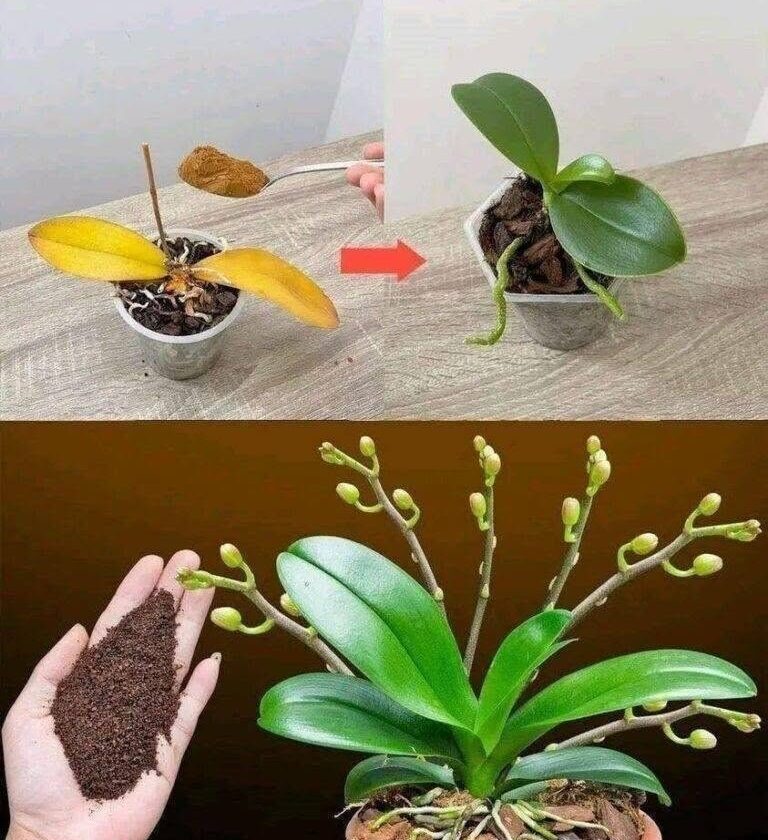
“Just a Teaspoon and Your Orchid Will Bloom Like Crazy?” — What Actually Helps Orchids Flower
Many gardening posts claim that adding one teaspoon of a household ingredient will make an orchid suddenly produce lots of flowers. While some homemade plant remedies may help in certain situations, there is no magic ingredient that instantly forces an orchid to bloom.
Orchids flower when their basic needs are met: the right light, nutrients, watering, and growing conditions.
What Really Encourages Orchid Blooms
1. Provide the Right Light
Most common orchids, such as Phalaenopsis (moth orchids), bloom best with:
- Bright, indirect light
- Protection from harsh direct midday sun
Too little light often leads to healthy leaves but no flowers.
2. Use the Right Fertilizer
Orchids benefit from a balanced orchid fertilizer during active growth.
Look for fertilizers designed for orchids and follow the label instructions. Too much fertilizer can damage roots.
3. Avoid Overwatering
Overwatering is one of the most common orchid problems.
Signs of trouble:
- Yellowing leaves
- Soft, mushy roots
- A sour smell from the potting medium
Water when the growing medium is starting to dry, and make sure the pot drains well.
4. Give a Temperature Difference
Many orchids respond to a slight drop in nighttime temperature, which can help trigger flower spikes.
5. Repot When Needed
Orchid roots need air. Repotting may help if:
- The potting bark has broken down.
- Roots are crowded or unhealthy.
- Water is staying wet too long.