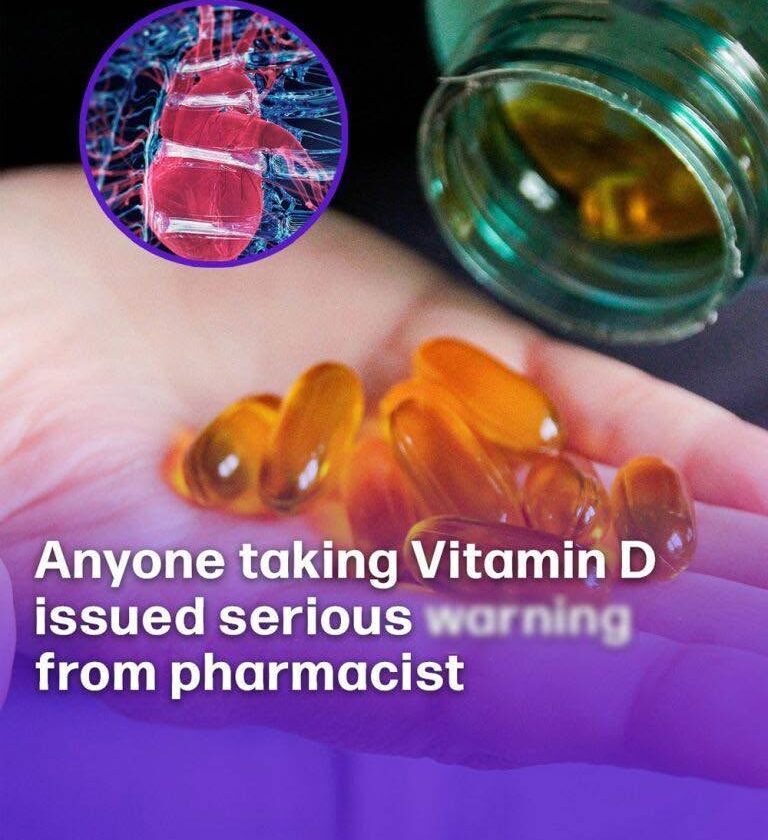
While headlines warning about Vitamin D often sound alarming, pharmacists and healthcare providers do issue genuine cautions regarding how these supplements are used. Vitamin D is essential, but because it is a fat-soluble vitamin, it behaves differently in the body than water-soluble vitamins (like Vitamin C), which you simply pee out if you take too much.
Pharmacists generally focus on a few key warnings when it comes to Vitamin D supplementation:
1. The Risk of Hypercalcemia (Vitamin D Toxicity)
Vitamin D’s main job is to help your body absorb calcium from the food you eat. However, if you take excessively high-dose supplements over a long period, it causes too much calcium to build up in your bloodstream (hypercalcemia). Pharmacists warn that this can lead to:
-
Nausea, vomiting, and a loss of appetite
-
Frequent urination and extreme thirst
-
Muscle weakness, fatigue, or confusion
-
Kidney stones or even kidney damage
2. The “More is Better” Fallacy
Many people assume that if a little bit of a vitamin is good, a massive dose must be exponentially better. Popping high-potency mega-doses (like 50,000 IU daily over-the-counter without a doctor’s supervision) can quickly push someone into toxicity. For most healthy adults, standard daily maintenance doses range between 400 IU and 2,000 IU, depending on individual blood levels.
3. Hidden Overlaps in Supplements
A common oversight pharmacists point out is accidental double-dosing. Many people take a dedicated Vitamin D pill while also taking a daily multivitamin and drinking fortified milk or orange juice. While it is hard to overdose from food and sun alone, combining multiple supplements can silently creep your total daily intake past safe upper limits.
4. Medication Interactions
Vitamin D can interact with certain prescription drugs. For example:
-
Thiazide diuretics (water pills) can cause calcium levels to spike dangerously if taken alongside Vitamin D.
-
Certain weight-loss drugs or cholesterol-lowering medications can alter how fat-soluble vitamins are absorbed or processed.
Best Practices for Safe Supplementation
-
Test, Don’t Guess: The safest way to know your dosage is to ask your doctor for a simple 25-hydroxy vitamin D blood test to see if you are actually deficient.
-
Check the Label: Stick to reputable brands that have third-party testing (like USP or NSF) to ensure the dose on the bottle matches what is actually inside.
Are you currently taking a Vitamin D supplement, or experiencing any symptoms that made you look into this?