Vinegar: The Key to Whiter Whites and Softer Towels?
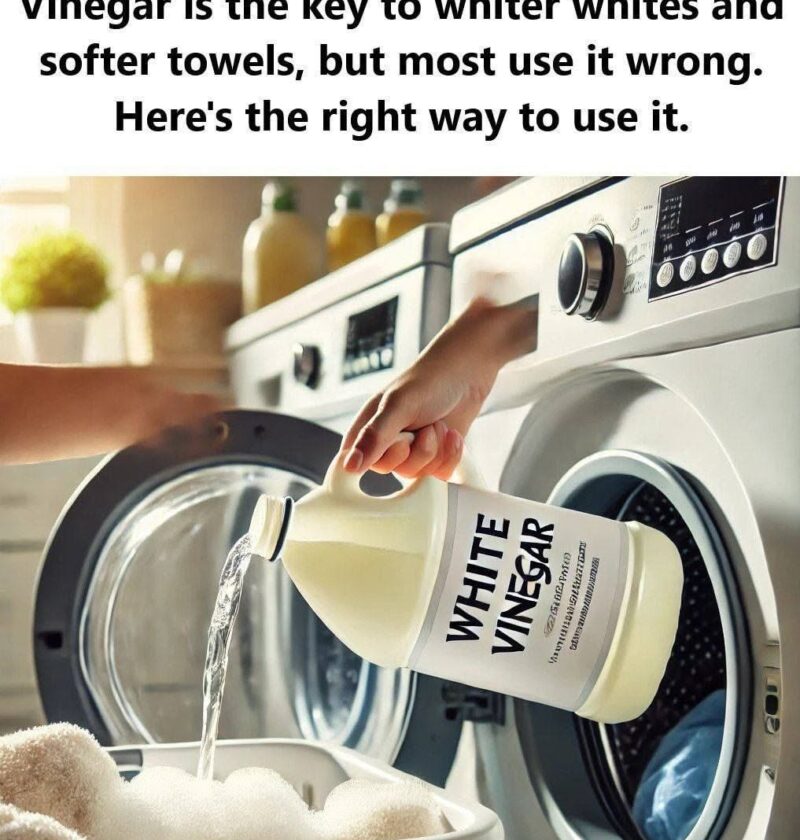
Vinegar can be useful in laundry, but the viral advice to pour it into every washing-machine load isn’t necessarily the “right way.” Vinegar can help with hard-water residue, some odors, and certain stains, but manufacturers warn that repeated exposure to its acidity can damage rubber seals and hoses in some washing machines.
W
Whirlpool
+1
A better way to use it
For a musty towel or stubborn odor: soak the towel separately in a diluted white-vinegar solution, then rinse thoroughly before washing. Whirlpool suggests one part vinegar to two parts water for odor treatment.
W
Whirlpool
For hard-water or detergent residue: a vinegar-and-water soak can help loosen mineral/detergent buildup. The American Cleaning Institute recommends a diluted vinegar soak for some stiff fabrics caused by hard-water residue.
C
Cleaning Institute
For genuinely white, stained laundry: oxygen bleach or an appropriate laundry bleach is generally more effective for whitening than vinegar. Always check the care label.
C
Cleaning Institute
For softer towels: don’t overload the washer, use the correct amount of detergent, and dry towels thoroughly. Too much detergent can leave residue that makes towels stiff.
W
Whirlpool
🚨 Never make this mistake
Never mix vinegar with chlorine bleach. The combination can release toxic chlorine gas.
W
Whirlpool
Also, check your washing-machine manufacturer’s instructions before putting vinegar inside the machine; some manufacturers specifically advise against it because of potential damage to rubber components.
W
Whirlpool
Bottom line: vinegar can be a useful occasional laundry treatment, but it’s not a magic fabric softener or whitening replacement, and using it in every wash may do more harm than good.
W
C
Sources