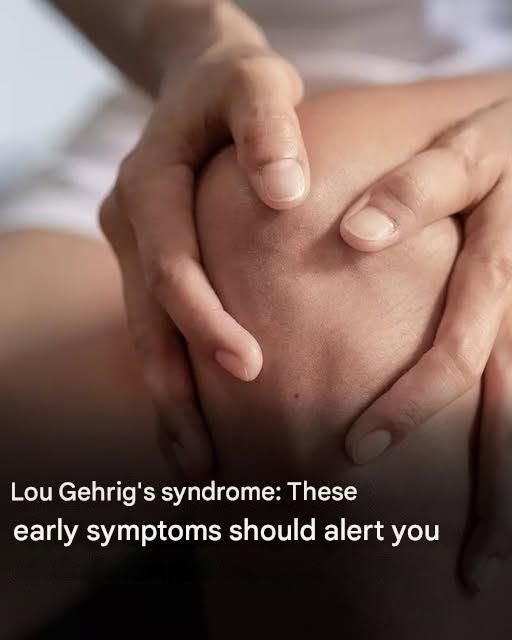
Lou Gehrig’s disease (ALS): early symptoms
Lou Gehrig’s disease is another name for amyotrophic lateral sclerosis (ALS), a progressive neurological disease that damages the motor neurons responsible for voluntary muscle movement.
M
Mayo Clinic
+1
Early symptoms can be subtle and vary considerably between people. Common first symptoms include:
Muscle weakness, often beginning in one hand, arm, foot, or leg.
Clumsiness or difficulty with ordinary tasks, such as buttoning clothes, writing, gripping objects, or walking.
Tripping or falling because of weakness in the legs, feet, or ankles.
Muscle twitching (fasciculations) or cramps, sometimes in the arms, shoulders, or tongue.
Muscle stiffness or abnormal tightness.
Slurred or slower speech.
Difficulty chewing or swallowing.
Less commonly, changes in behavior, thinking, or emotional responses can occur.
M
Mayo Clinic
+2
An important distinction
Having one of these symptoms does not mean someone has ALS. Muscle twitching, weakness, cramps, numbness, and coordination problems can have many other causes, and ALS can be difficult to diagnose in its early stages. Doctors use a neurological examination and tests such as EMG/nerve-conduction studies while looking for other possible explanations.
M
Mayo Clinic
ALS typically causes progressive weakness rather than symptoms that repeatedly come and go. Sensation is usually preserved, and significant pain is not generally an early feature.
M
Mayo Clinic
If you’re asking because you or someone you know has a particular symptom, tell me what it is, where it occurs, how long it has been happening, and whether it’s getting worse. I can explain how concerning that pattern would be for ALS versus more common causes.
M
Sources