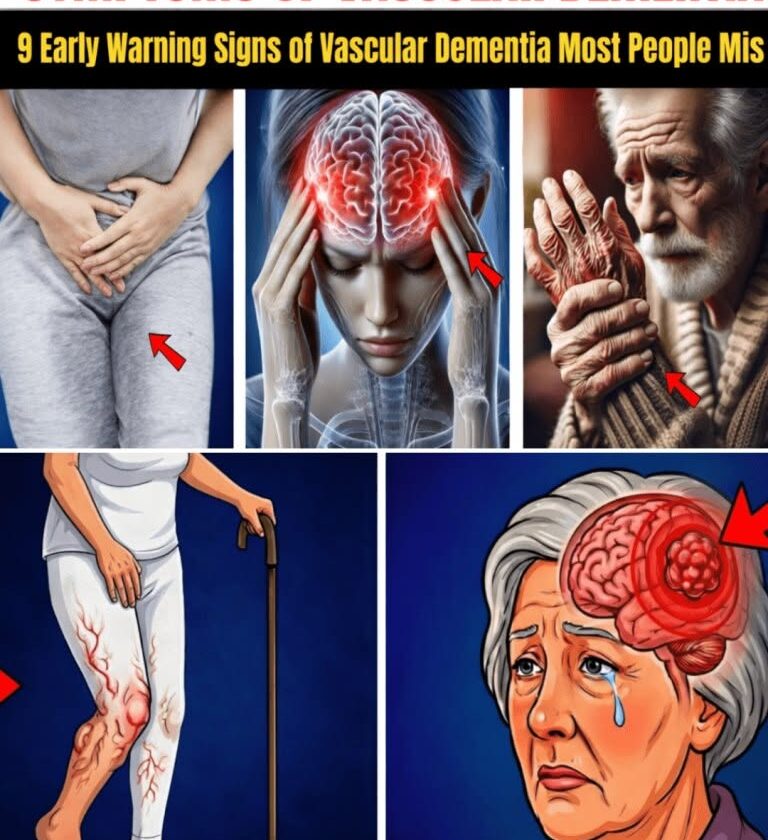
9 early signs of vascular dementia that can be overlooked
That headline is a little sensational. There isn’t an official list of exactly nine early signs, and “especially number 3” is usually a clickbait device. The recognized early pattern is more important than the number of symptoms.
Vascular dementia results from damage to the brain caused by reduced or interrupted blood flow. Symptoms can develop gradually, or sometimes appear suddenly after a stroke.
N
nhs.uk
+1
Common early signs include:
Slower thinking — taking noticeably longer to process information or respond.
Difficulty planning or organizing — struggling with tasks that previously came naturally.
Problems following a sequence of steps — for example, difficulty preparing a familiar meal or completing a routine task. This is one of the commonly recognized early features.
A
Alzheimer’s Society
Reduced concentration — difficulty staying focused or becoming easily distracted.
Difficulty making decisions or solving problems.
Short periods of confusion — particularly episodes of suddenly losing track of what is happening.
A
Alzheimer’s Society
+1
Changes in mood or behavior — including depression, becoming more emotional, or losing interest in activities.
Walking or balance problems — becoming less steady, shuffling, or experiencing more falls.
N
nhs.uk
+1
Mild memory or language problems — these can occur, but memory loss isn’t necessarily the dominant early symptom as it often is in Alzheimer’s disease.
N
nhs.uk
+1
A particularly important warning sign
If cognitive or physical symptoms appear suddenly—especially facial drooping, weakness or numbness on one side, difficulty speaking, severe confusion, trouble walking, or a sudden severe headache—think stroke rather than simply dementia and seek emergency medical care immediately.
N
nhs.uk
+1
Having one or several of these symptoms doesn’t establish vascular dementia. Depression, medication effects, sleep problems, vitamin deficiencies, strokes, Alzheimer’s disease and other conditions can cause similar symptoms. Diagnosis generally involves a medical history, cognitive assessment, physical examination, blood tests and often brain imaging such as CT or MRI.
D
dementiaconnect.alzheimers.org.uk
The encouraging part is that identifying vascular risk factors early matters. Blood pressure, diabetes, cholesterol, smoking and other cardiovascular risks can be addressed to reduce the risk of further vascular brain injury.
N
A
D
Sources