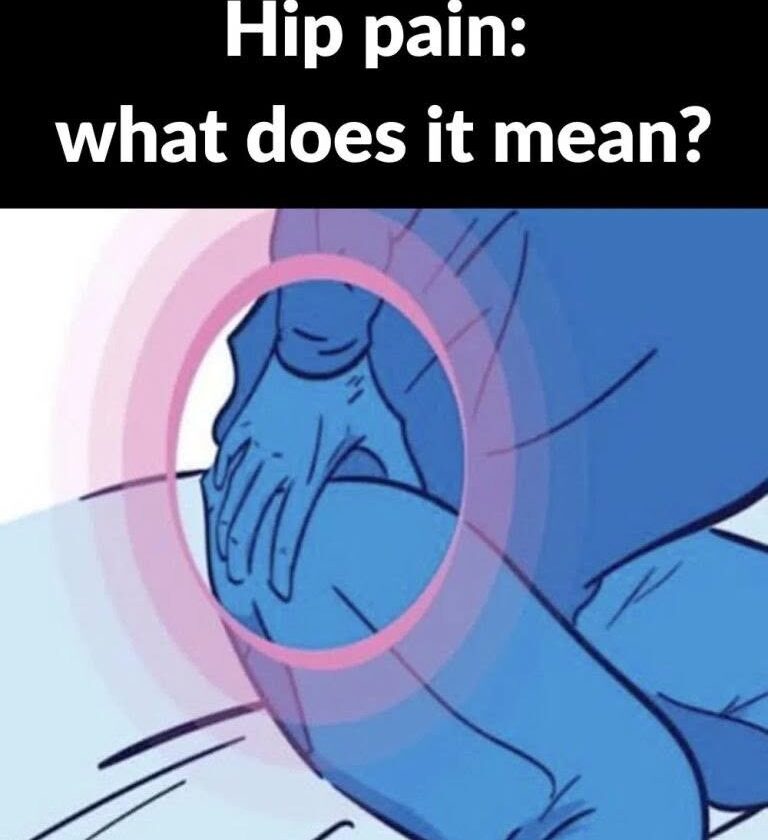
Hip pain is a symptom, not a diagnosis on its own. What it means depends on where the pain is, how it feels, and what triggers it (walking, sitting, lying down, etc.).
Here are the most common causes doctors think about:
1) Osteoarthritis (very common, especially with age)
This is “wear and tear” of the hip joint.
Typical signs:
- Deep, aching pain in the groin or front of hip
- Stiffness (especially in the morning or after sitting)
- Pain worsens with walking or stairs
- Reduced range of motion
It usually develops slowly over time.
2) Trochanteric bursitis (outer hip pain)
This happens when the fluid-filled cushion over the outer hip becomes irritated.
Typical signs:
- Pain on the outside of the hip
- Worse when lying on that side
- Tender to touch
- Pain when climbing stairs or standing up
It’s often due to overuse, posture issues, or repetitive strain.
3) Sciatica (nerve-related pain)
This isn’t actually a hip joint problem, but it often feels like one.
Typical signs:
- Sharp, shooting pain from lower back into hip and leg
- Tingling or numbness
- Worse with sitting or bending
- May affect one side only
It comes from irritation of the sciatic nerve, often due to a disc issue in the spine.
Other possible causes
- Muscle strain (after exercise or lifting)
- Hip labral tear (especially in younger active people)
- Hip fractures (more urgent, especially after a fall)
- Referred pain from the lower back or knee
When hip pain is more serious
You should get checked urgently if you have:
- Sudden severe pain or inability to walk
- Pain after a fall or injury
- Fever with hip pain
- Night pain that doesn’t improve with rest
- Swelling or redness around the joint
Bottom line
Hip pain usually comes from either:
- the joint itself (like arthritis),
- surrounding soft tissue (like bursitis), or
- the lower back referring pain (like sciatica)
If you want, tell me where exactly your pain is (front, side, or back of hip) and what makes it worse—I can narrow it down more precisely.