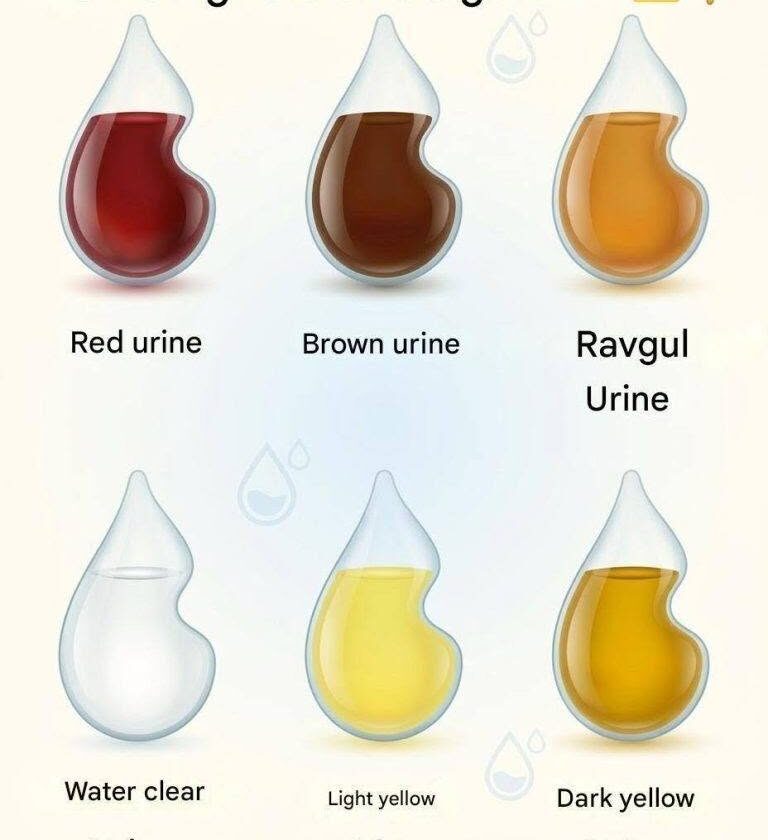
Urine color can give you useful clues about hydration and sometimes health, but it cannot diagnose a condition by itself.
What the colors can mean
Pale straw / light yellow: Usually a sign of good hydration.
Dark yellow / amber: Often means you need more fluids, especially after sweating or exercise.
Completely clear: You may be drinking more water than you need. Constantly clear urine isn’t necessarily healthier.
Cloudy: Can occur from dehydration, crystals, or harmless causes, but persistent cloudiness—especially with burning, urgency, fever, or pain—can indicate a urinary infection.
Pink or red: May come from foods such as beets, but can also indicate blood in the urine. Unexplained red or pink urine should be medically evaluated.
Brown / cola-colored: Can indicate severe dehydration, but may also occur with liver or muscle problems or certain medications. New brown urine warrants medical attention.
Orange: Sometimes caused by dehydration or medications, but can also be associated with liver or bile-duct problems.
Blue or green: Uncommon. Food dyes and some medications can cause it; occasionally it is associated with infection or other medical conditions.
One important point
Urine color alone isn’t a reliable health test. Medications, supplements, foods, exercise, and the concentration of your urine can all change its appearance.
If you have blood in your urine, persistent brown/dark urine, severe pain, fever, yellowing of the skin/eyes, or a major unexplained change in urine color, it’s worth getting checked rather than trying to interpret the color yourself.