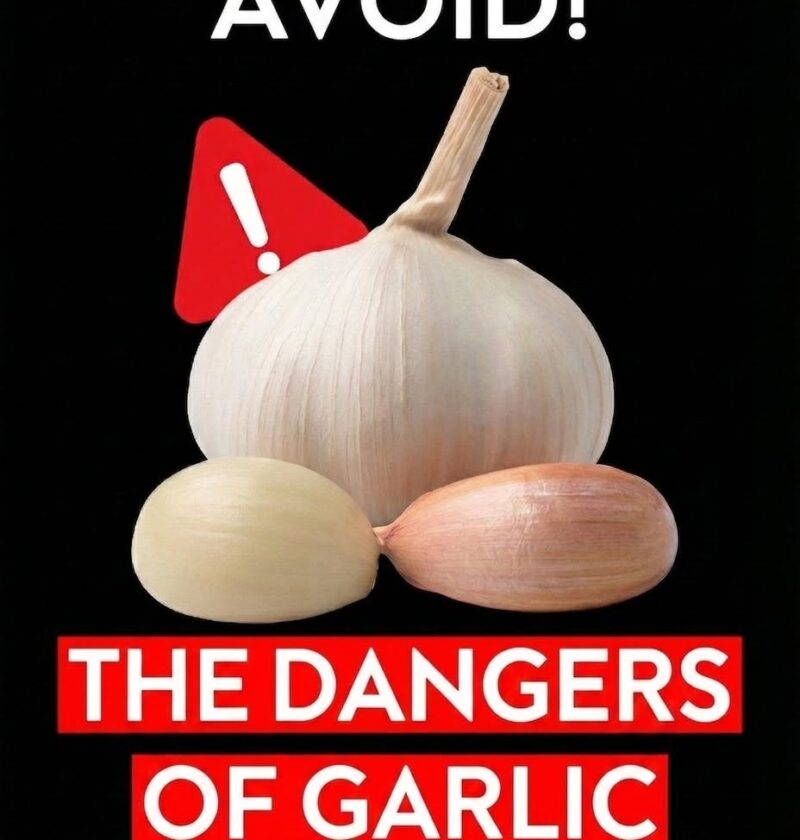
If you’re looking for the 10 mistakes to avoid when eating garlic, here are the most important ones:
Eating huge amounts at once — More garlic isn’t necessarily better. Large quantities can cause heartburn, abdominal pain, gas, nausea, or diarrhea.
Eating raw garlic on an empty stomach if it bothers you — Raw garlic can be irritating for some people. If you notice burning or stomach discomfort, have it with food.
Assuming garlic is a replacement for medication — Garlic may have modest effects on things such as blood pressure or cholesterol, but it shouldn’t replace prescribed treatment.
Ignoring blood-thinning effects — Garlic can have antiplatelet effects. Be particularly cautious if you take anticoagulants or antiplatelet medicines, especially before surgery.
Using garlic supplements casually — Concentrated supplements can deliver much more garlic-derived compounds than normal food portions and may interact with medications.
Swallowing whole cloves — Whole cloves aren’t necessarily easier or safer. Chopping or crushing garlic releases compounds such as allicin, while swallowing large pieces can also be uncomfortable.
Burning garlic during cooking — Extremely high heat can make garlic bitter and may reduce some of its beneficial compounds. Add minced garlic later in cooking when practical.
Believing every “garlic detox” claim — Garlic isn’t a magic detoxifier, parasite cleanser, or cure-all. Be skeptical of dramatic health claims.
Applying raw garlic directly to your skin — This can cause significant irritation and even chemical burns. Don’t use raw garlic as a home remedy for wounds or skin problems.
Ignoring persistent digestive symptoms — If garlic consistently causes severe reflux, abdominal pain, diarrhea, or other symptoms, don’t simply keep increasing your intake. Discuss the symptoms with a healthcare professional.
A sensible approach: for most people, garlic is best treated as a flavorful food rather than a medicine—use moderate amounts as part of a varied diet.