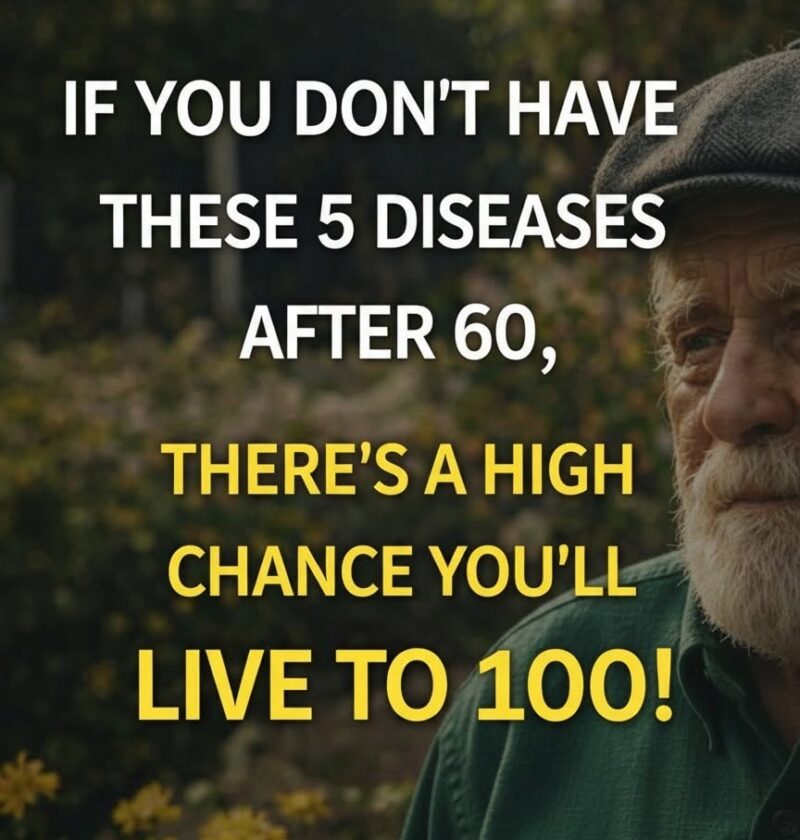
The claim “If you reach 60 without these 5 diseases, you have a high probability of living to 100” is an oversimplification, but it is based on a real observation: people who reach older age without major chronic diseases tend to have substantially better longevity prospects.
The five diseases most often associated with reduced life expectancy are:
- Heart Disease
- The leading cause of death worldwide.
- Includes coronary artery disease, heart failure, and heart attacks.
- Stroke
- Can cause severe disability and increases the risk of future cardiovascular events.
- Type 2 Diabetes
- Raises the risk of heart disease, kidney disease, vision loss, and stroke.
- Cancer
- Especially cancers linked to smoking, obesity, and aging.
- Chronic Obstructive Pulmonary Disease
- A progressive lung disease often associated with smoking and long-term air pollution exposure.
Why these matter
Research consistently shows that reaching age 60 free of major chronic diseases is associated with:
- Longer life expectancy
- Better physical function
- Lower disability rates
- Greater likelihood of reaching advanced ages such as 90 or even 100
However, being free of these diseases at 60 does not guarantee living to 100. Longevity is influenced by many factors, including:
- Genetics
- Blood pressure and cholesterol levels
- Physical activity
- Diet
- Smoking status
- Sleep quality
- Social connections
- Access to healthcare
- Luck and environmental factors
Habits linked to exceptional longevity
Studies of long-lived populations suggest that people who live into their 90s and 100s often:
- Stay physically active throughout life
- Avoid smoking
- Maintain a healthy weight
- Eat diets rich in vegetables, fruits, legumes, and whole grains
- Manage stress effectively
- Maintain strong social relationships
- Keep chronic conditions under good control when they occur
So, reaching 60 without heart disease, stroke, type 2 diabetes, cancer, or COPD is certainly a favorable sign for longevity, but it is one piece of a much larger picture rather than a reliable predictor that someone will live to 100.