How to Clean Dirty Pillows So They Look White and Smell Fresh Again
Over time, pillows can collect sweat, body oils, dust, skin cells, and odors. The right cleaning method depends on the pillow filling, so always check the care label first.
1. Check the pillow type
- Synthetic/polyester pillows: Often machine washable.
- Down or feather pillows: Usually washable, but require gentle handling and thorough drying.
- Memory foam or latex pillows: Usually should not be machine washed; clean the cover and spot-clean the foam instead.
2. Machine-washing method (for washable pillows)
- Remove the pillowcase and protector.
- Wash two pillows at a time to keep the washing machine balanced.
- Use warm water (if the label allows) and a gentle cycle.
- Add a small amount of mild detergent.
- Run an extra rinse cycle to remove soap residue.
3. For whitening and odor removal
Instead of harsh bleaching, many people use:
- Baking soda: Helps absorb odors.
- White vinegar (added during the rinse cycle): Can help reduce musty smells.
Avoid mixing vinegar with bleach, as this creates dangerous fumes.
4. Dry pillows completely
This step is essential:
- Use a dryer on a low or moderate heat setting if allowed.
- Add dryer balls or clean tennis balls to help fluff the filling.
- Stop periodically and check that the inside is fully dry.
A pillow that remains damp inside can develop mold or a musty odor.
5. Between washes
To keep pillows fresher:
- Use a washable pillow protector.
- Wash pillowcases weekly.
- Air pillows out occasionally in a dry, sunny area.
- Replace pillows when they no longer regain their shape or provide support.
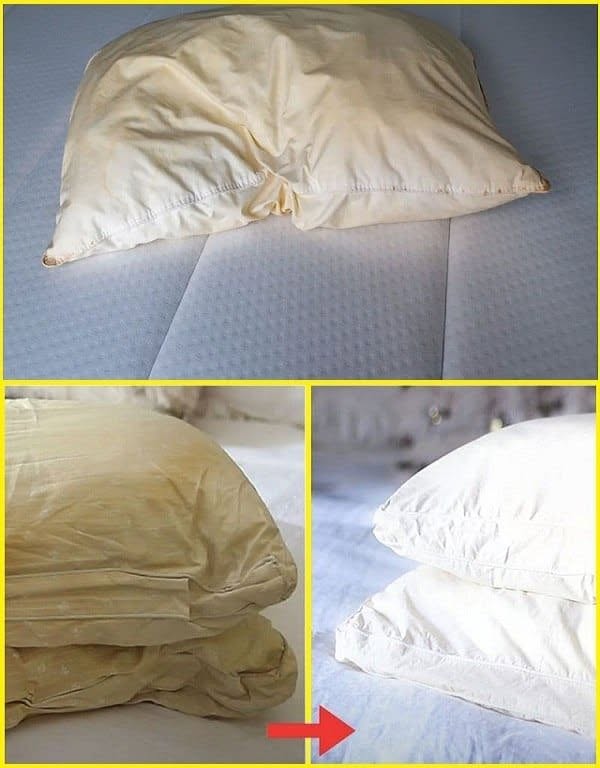
Tip: Yellowing is often caused by sweat and oils absorbed over time. Cleaning can improve appearance, but older pillows may not return to a brand-new white color if the fibers have permanently changed.