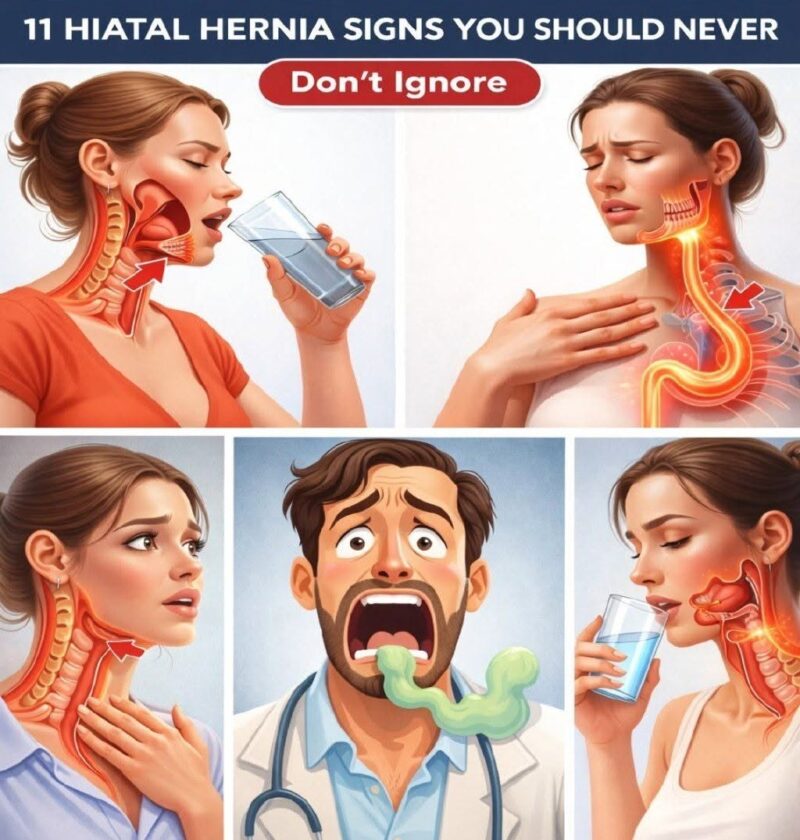
Here are 10 common signs and symptoms:
1. Heartburn
A burning feeling in the chest, especially after eating or at night. This is one of the most common symptoms.
2. Acid Reflux
Stomach acid moving back into the throat, sometimes causing a sour or bitter taste in the mouth.
This is closely linked with Gastroesophageal Reflux Disease.
3. Chest Discomfort
Pressure or pain in the chest that can sometimes feel similar to heart-related pain (important to get checked if severe).
4. Difficulty Swallowing
Food may feel like it’s “sticking” in the chest or moving slowly down the esophagus.
5. Frequent Burping
Increased gas or pressure in the upper stomach can lead to frequent belching.
6. Bloating or Fullness
Feeling full quickly, even after small meals.
7. Regurgitation
Food or sour liquid coming back into the mouth, especially when bending over or lying down.
8. Sore Throat or Hoarseness
Acid reaching the throat can irritate vocal cords, causing:
- Hoarse voice
- Chronic throat clearing
- Scratchy throat
9. Chronic Cough
A long-lasting cough, often worse at night, caused by acid irritation of the airway.
10. Shortness of Breath (Rare)
A large hiatal hernia can press on the lungs or cause discomfort when breathing deeply.
When to be concerned
Seek medical help if you experience:
- Severe chest pain
- Trouble swallowing that worsens
- Vomiting blood or black stools
- Unexplained weight loss
- Persistent symptoms despite medication
Important note
A hiatal hernia often overlaps with Gastroesophageal Reflux Disease, and many symptoms come from acid reflux rather than the hernia itself.
Simple lifestyle tips that help
- Eat smaller meals
- Avoid lying down within 2–3 hours after eating
- Reduce spicy, fatty, and acidic foods
- Elevate the head of the bed
- Maintain a healthy weight
If you want, I can also explain how to tell the difference between hiatal hernia, GERD, and heart pain, which is a common source of confusion.