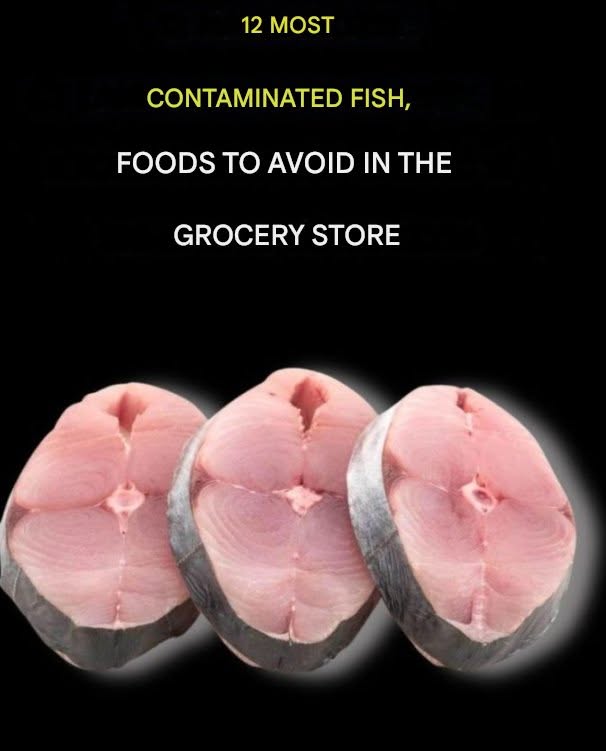
A more accurate way to think about it is: some fish tend to accumulate higher mercury or environmental toxins, especially large predatory species.
Here are fish that are commonly flagged as higher in mercury or contaminants (limit or avoid frequent consumption):
1. Shark
Top predator → high mercury accumulation.
2. Swordfish
One of the most well-known high-mercury fish.
3. King mackerel
High in mercury; often advised to avoid.
4. Tilefish (especially Gulf of Mexico)
Can contain very high mercury levels.
5. Bigeye tuna
Higher mercury than light tuna varieties.
6. Marlin
Large predatory fish → mercury buildup.
7. Orange roughy
Very long-lived fish → accumulates toxins over time.
8. Escolar
Can cause digestive issues in some people due to indigestible fats.
9. Chilean sea bass (Patagonian toothfish)
Concerns include mercury + sustainability issues.
10. Bluefin tuna
High mercury + overfishing concerns.
11. Atlantic mackerel (king is worse; Atlantic is moderate but often mixed in lists)
Depends on species—confusion is common.
12. Farmed imported fish (varies widely)
Not a single species—concerns depend on farming practices, antibiotics, and feed quality.
Important context (often missing in viral lists)
- Not all fish are dangerous. Many are very healthy (like salmon, sardines, trout).
- Dose matters: occasional consumption of higher-mercury fish is usually fine for most adults.
- Pregnant women and children are advised to be more cautious.
- Cooking does not remove mercury (it’s in the tissue, not surface contamination).
Better “safe everyday choices”
Generally lower-mercury options include:
- Salmon
- Sardines
- Trout
- Herring
- Anchovies
If you want, I can also give you a clear “best fish for health vs budget vs weight loss” guide or a safe weekly seafood plan.