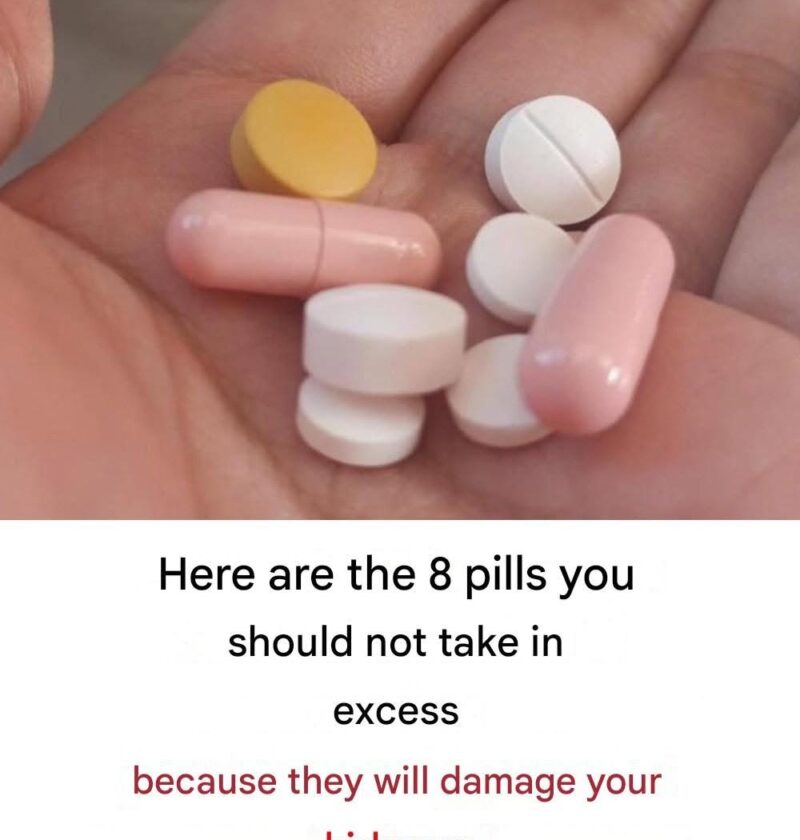
That headline is another clickbait-style oversimplification. There are no “eight pills everyone should never take” that automatically damage kidneys. Kidney risk depends on dose, duration, existing health problems, hydration, and combinations with other drugs.
That said, some common medications can harm the kidneys if misused or taken long-term without supervision.
🧠 Medicines that can affect kidney health (when misused)
💊 1. Painkillers (NSAIDs)
Ibuprofen
Diclofenac
- Can reduce blood flow to kidneys
- Risk increases with dehydration or long-term use
💊 2. Naproxen
Naproxen
- Similar risk as other NSAIDs
- Higher risk in older adults or kidney disease patients
💊 3. Aspirin (high dose or chronic use)
Aspirin
- Low-dose aspirin (for heart protection) is usually safe
- High doses can stress kidneys over time
💊 4. Certain antibiotics
Gentamicin
- Can damage kidney tubules if not carefully dosed
- Used under strict medical supervision
💊 5. Contrast dyes (for scans)
Iodinated contrast media
- Can temporarily stress kidneys in high-risk patients
- Doctors often check kidney function before use
💊 6. Blood pressure diuretics (if overused or dehydrating)
Furosemide
- Can affect kidney function if dehydration occurs
- Often necessary and safe when monitored
💊 7. Certain antivirals (rare risk)
Acyclovir
- Can crystallize in kidneys if hydration is poor
- Risk reduced with proper dosing and fluids
💊 8. Herbal or “detox” supplements (important!)
Not all are regulated. Some may contain:
- Heavy metals
- Toxic plant compounds
- Undeclared pharmaceuticals
⚠️ Important truth
The biggest kidney risks usually come from:
- Long-term painkiller overuse
- Dehydration
- Uncontrolled diabetes or high blood pressure
- Mixing multiple medications without guidance
🧠 Bottom line
It is not about “8 forbidden pills”. It’s about:
- correct dose
- correct duration
- medical supervision
- individual kidney health
💡 If you want
Tell me what medications or supplements you’re actually taking, and I can explain which ones are safe for kidneys and what precautions to follow without fear-based misinformation.