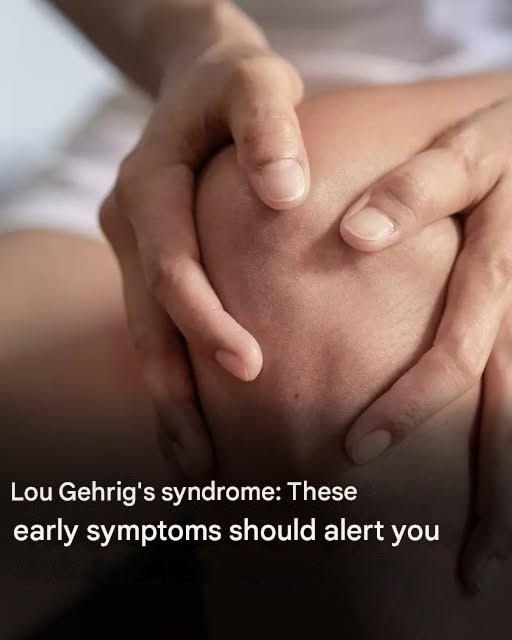
Lou Gehrig’s disease is another name for Amyotrophic Lateral Sclerosis (ALS), a progressive neurological disease that affects the nerve cells controlling voluntary muscles.
Early symptoms of ALS
Symptoms often begin subtly and can vary from person to person.
💪 Muscle weakness
One of the most common first signs:
- Weakness in a hand, arm, foot, or leg
- Difficulty with tasks like buttoning clothes, opening jars, or climbing stairs
🚶 Tripping or stumbling
People may notice:
- Frequent falls
- Foot drop (difficulty lifting the front of the foot)
✍️ Hand weakness
- Reduced grip strength
- Difficulty writing or handling small objects
🗣️ Speech changes
Some people develop:
- Slurred speech
- Difficulty pronouncing words clearly
😬 Muscle twitching (fasciculations)
- Small, involuntary muscle twitches
- Often seen in the arms, legs, shoulders, or tongue
🦵 Muscle cramps and stiffness
- Painful cramps
- Tight or stiff muscles
😮 Difficulty swallowing
- Choking or coughing while eating or drinking
- Feeling that food is sticking in the throat
Symptoms that are usually NOT early signs
ALS typically does not begin with:
- Loss of sensation or numbness
- Severe pain as the main symptom
- Problems with bladder or bowel control
These symptoms often suggest other conditions.
Important note
Many common conditions can cause weakness, twitching, cramps, or fatigue. Having one of these symptoms does not mean a person has ALS.
When to seek medical evaluation
Consider seeing a healthcare professional if you have:
- Progressive muscle weakness
- Persistent unexplained muscle wasting
- Increasing difficulty speaking, swallowing, or walking
Bottom line
The earliest signs of ALS are usually progressive muscle weakness, twitching, cramps, and difficulties with movement or speech. Because many other conditions can mimic these symptoms, a medical evaluation is needed to determine the cause.