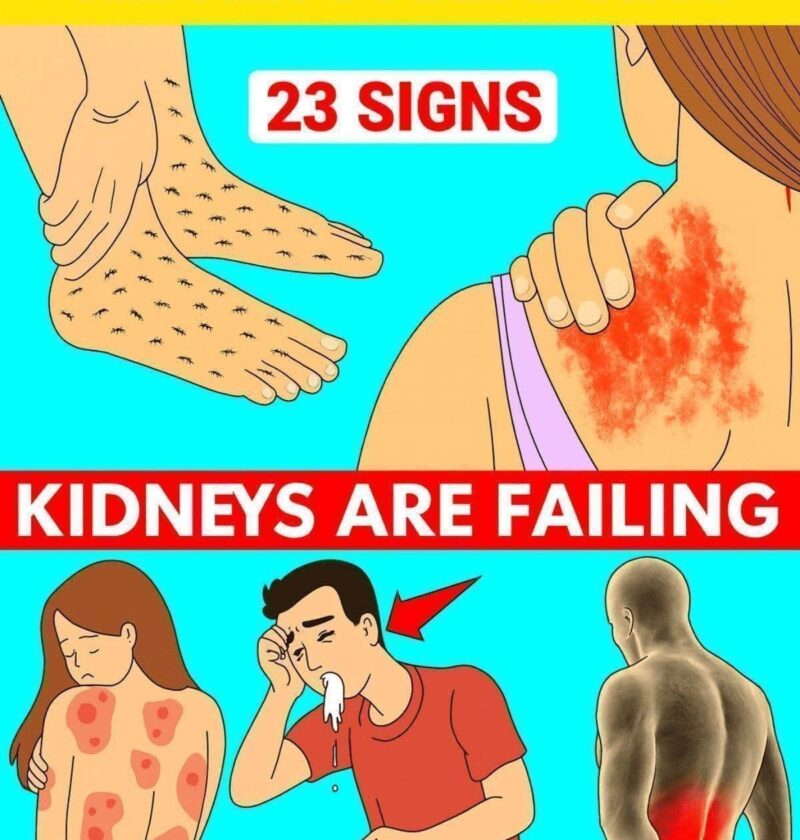
1. Foamy urine
Can suggest excess protein leaking into urine.
2. Blood in urine (pink, red, or cola-colored)
May indicate irritation or damage in the urinary system.
3. Needing to urinate more at night
Frequent night urination can be an early sign.
4. Urinating much less than usual
A drop in urine output can signal reduced kidney function.
5. Swollen ankles or feet
Fluid retention due to poor filtration.
6. Puffy eyes (especially in the morning)
Fluid imbalance can show up around the eyes first.
7. Persistent fatigue
Toxins building up in the blood can cause tiredness.
8. Poor concentration or “brain fog”
Waste buildup can affect cognitive clarity.
9. Loss of appetite
A common but often ignored symptom.
10. Nausea or vomiting
Can happen when waste products accumulate.
11. Metallic taste in mouth
Changes in waste processing can alter taste.
12. Bad breath (ammonia-like)
Sometimes linked to urea buildup.
13. Muscle cramps
Often related to electrolyte imbalance.
14. Dry or itchy skin
Waste buildup can affect skin health.
15. High blood pressure
Kidneys help regulate blood pressure.
16. Shortness of breath
Fluid buildup can affect the lungs.
17. Dizziness or lightheadedness
Can relate to anemia from kidney issues.
18. Pale skin
Often linked to reduced red blood cell production.
19. Feeling cold more often
Also related to anemia.
20. Swollen face or hands
Generalized fluid retention.
21. Back pain (lower flank area)
Sometimes linked to kidney inflammation or stones.
22. Changes in urine color or smell
Strong, unusual changes can be a clue.
23. Trouble sleeping
Toxin buildup and frequent urination can disrupt sleep.
Important reality check
Many of these symptoms can also come from dehydration, infections, diabetes, blood pressure issues, or lifestyle factors. Kidney problems usually become more concerning when multiple symptoms persist together over time.
If you’re noticing a few of these and they’re not going away, a simple blood test (creatinine, eGFR) and urine test can quickly clarify what’s going on.
If you want, tell me what symptoms you’re actually experiencing—I can help you sort out what’s likely and what’s worth checking urgently.