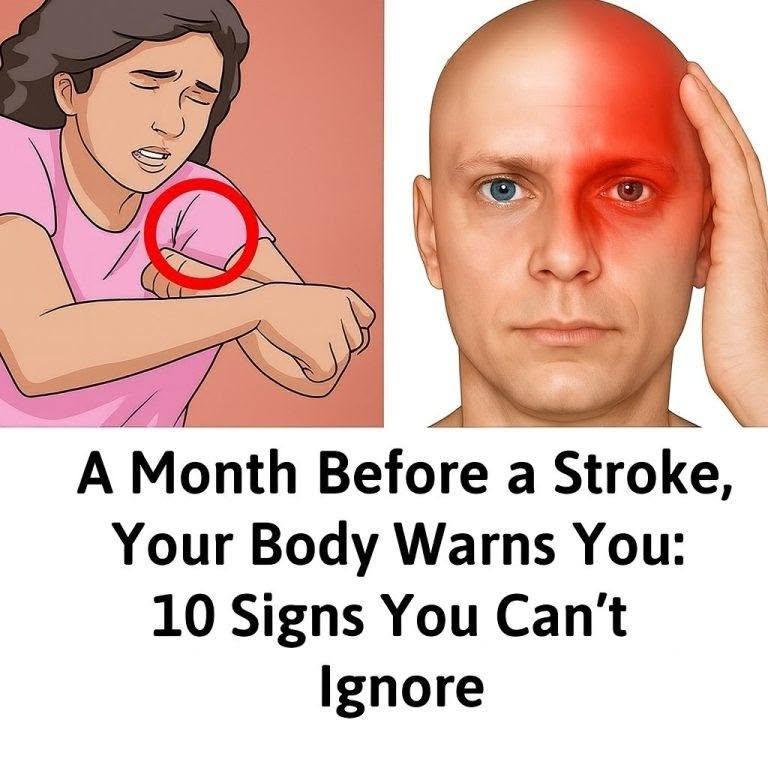
A stroke usually happens suddenly, and many people do not get clear warning signs a month in advance. However, some people may experience earlier warning events or risk-related symptoms.
A key concept is a transient ischemic attack (TIA), sometimes called a “mini-stroke,” which can occur days or weeks before a full stroke.
10 possible warning signs that should never be ignored
1. Sudden weakness or numbness (especially one side)
- Face, arm, or leg
- Even if it comes and goes
2. Brief episodes of speech difficulty
- Slurred speech
- Trouble finding words
- Confusion while talking
3. Temporary vision loss or blurring
- One eye or both
- “Curtain coming down” feeling
4. Sudden dizziness or balance problems
- Trouble walking straight
- Feeling unsteady without reason
5. Unusual, sudden severe headache
- Especially if different from usual headaches
6. Short episodes of confusion
- Disorientation or memory lapses
- Difficulty understanding simple instructions
7. Tingling or numbness that comes and goes
- Especially in face or limbs
- Often brief but recurring
8. Sudden trouble swallowing
- Choking or coughing while eating or drinking
9. Sudden fatigue or weakness
- Unexplained exhaustion
- Especially if combined with other symptoms
10. Repeated “mini-episodes”
- Short-lasting neurological symptoms that resolve quickly
- Often actually TIAs
Important reality check
- These symptoms are not always a stroke warning
- Many other conditions can cause similar issues (migraine, low blood pressure, nerve problems)
- But any sudden neurological symptom should be treated seriously
When to act immediately
Call emergency services if any of these appear suddenly:
- Face drooping
- Arm weakness
- Speech difficulty
- Vision loss or confusion
Even if symptoms disappear, it could still be a medical emergency.
Bottom line
There is no reliable “1-month warning list” for stroke. Instead, the real red flag is sudden, brief, or repeated neurological symptoms, which may indicate a TIA and require urgent evaluation.
If you want, I can also show you a simple checklist to tell stroke vs migraine vs dizziness apart.