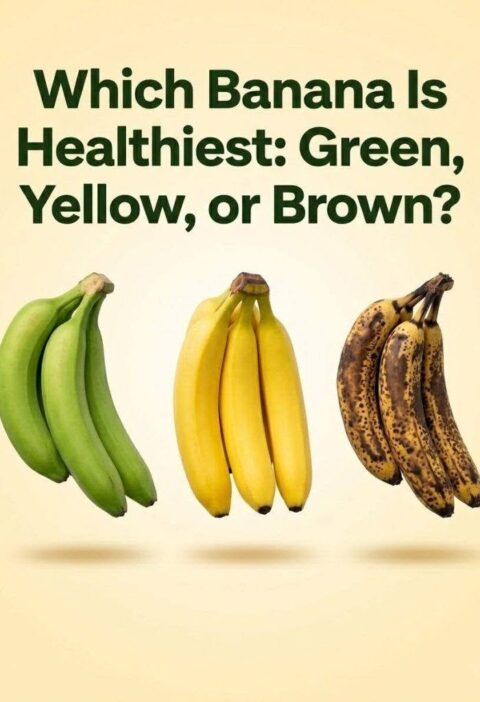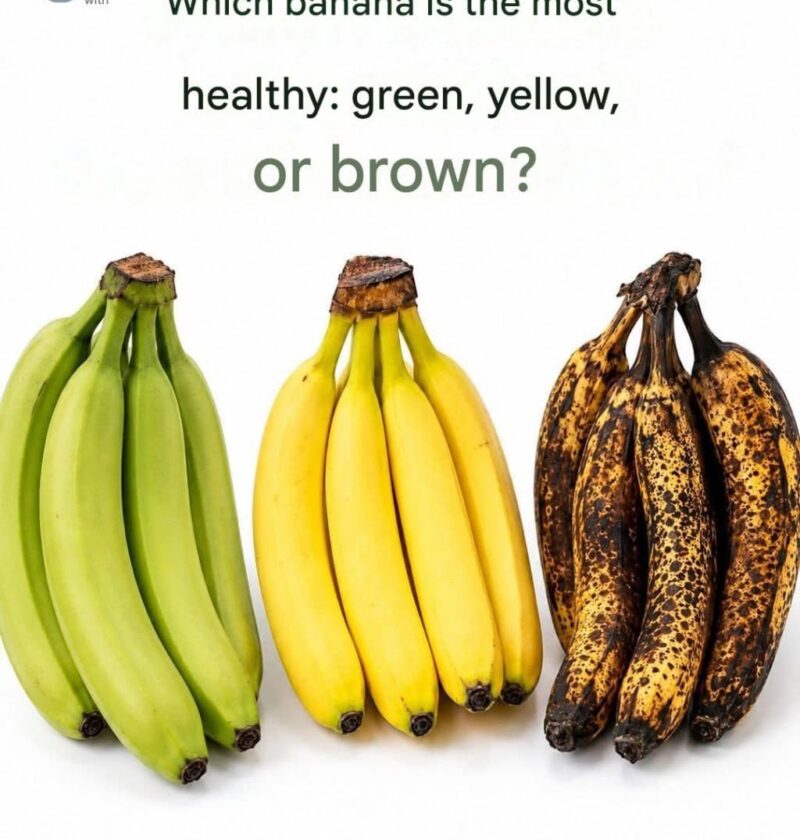
There isn’t one “best” banana for everyone—green, yellow, and brown bananas are just different stages of the same fruit, and their nutrition and effects on your body change as they ripen.
Here’s the real breakdown:
🟢 Green bananas (unripe)
Best for: blood sugar control, gut health
- Higher in resistant starch (acts like fiber)
- Slower digestion → less blood sugar spike
- More filling
Pros:
- Better for weight management and insulin control
- Supports gut bacteria
Cons:
- Harder to digest for some people
- Less sweet, more starchy taste
🟡 Yellow bananas (ripe) — most common
Best for: general health and energy
- Balanced carbs (starch turns into natural sugars)
- Easier to digest
- Good source of potassium and vitamins
Pros:
- Good energy boost
- Gentle on the stomach
- Ideal “everyday banana”
Cons:
- Slightly higher sugar than green bananas
🟤 Brown bananas (very ripe)
Best for: quick energy, baking
- Highest in simple sugars
- Soft and easy to digest
- Antioxidants increase as it ripens
Pros:
- Quick energy source
- Good for smoothies or baking
Cons:
- Highest sugar impact on blood glucose
- Less filling than green bananas
🧠 So which is healthiest?
- 🟢 Green banana: best for blood sugar control & gut health
- 🟡 Yellow banana: best overall balanced choice
- 🟤 Brown banana: best for quick energy or recipes
👉 For most people, the yellow banana is the healthiest everyday option because it balances digestion, nutrients, and taste.
Bottom line
All stages are healthy—the “best” depends on your goal, not just the banana.
If you want, I can also compare bananas vs apples vs oranges for weight loss or diabetes control.