What a colonoscopy actually is
A colonoscopy is a procedure where a doctor inserts a flexible tube with a camera into the rectum to examine the colon for:
- polyps
- inflammation
- bleeding
- cancer or precancerous changes
Because it involves entering the body through a natural opening and physically examining the colon internally, it is classified as invasive.
Why you’re seeing “new method” claims
Posts like this usually refer to one of these real developments:
1. Capsule endoscopy (camera pill)
- You swallow a small camera capsule
- It takes images as it passes through the gut
- BUT: it does not fully replace colonoscopy for screening polyps
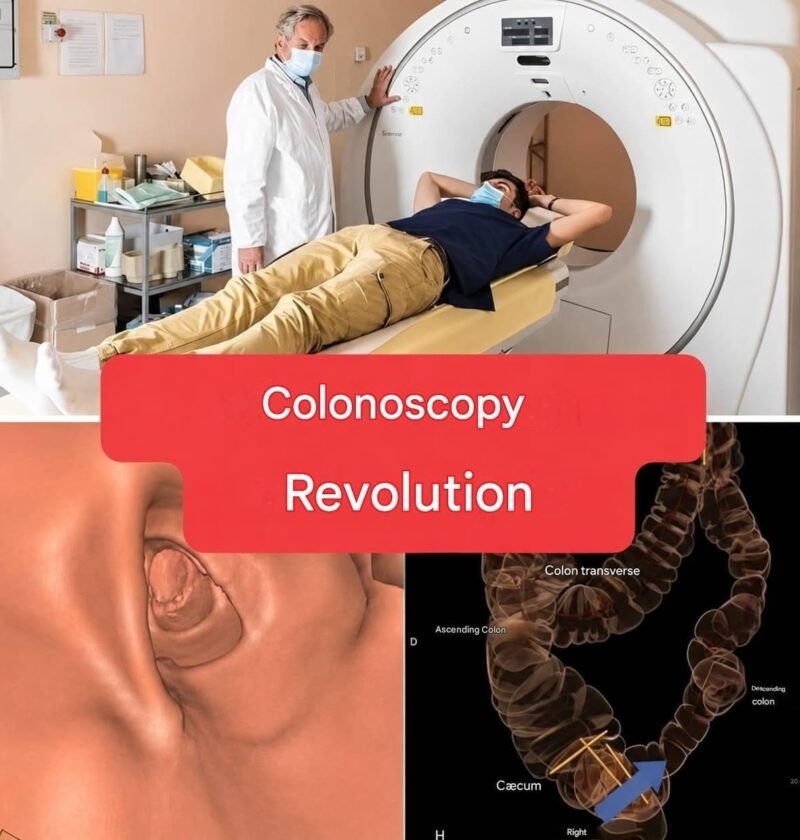
2. CT colonography (“virtual colonoscopy”)
- Uses CT scans to image the colon
- Less invasive, but still requires bowel prep
- If something abnormal is found, a real colonoscopy is still needed
Key limitation of “non-invasive” alternatives
They are useful, but:
- cannot remove polyps during the same procedure
- may miss small lesions
- often still require follow-up colonoscopy
Bottom line
The statement:
“Colonoscopy will no longer be an invasive examination”
is not accurate. At best, it confuses colonoscopy with newer or alternative screening methods.
A true colonoscopy remains an invasive but highly effective gold-standard test, especially for detecting and preventing colorectal cancer.
If you want, I can explain which screening method is best for different ages and risk levels, and when a colonoscopy is actually necessary.