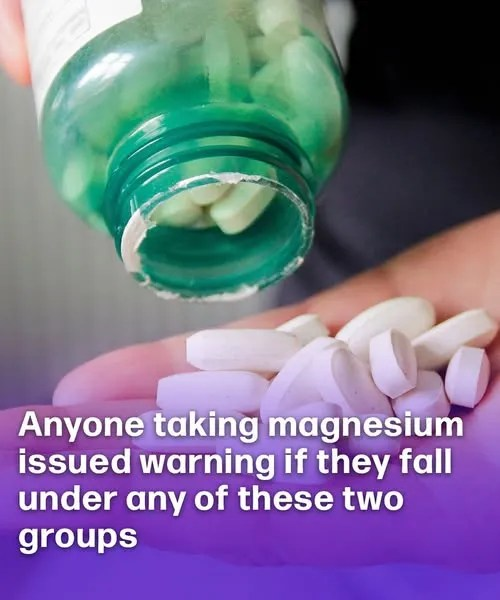
Headlines like that are usually referring to a real but well-known caution, not a sudden new danger. Magnesium supplements are generally safe for most people, but health experts repeatedly warn certain groups to be careful because magnesium can build up in the body.
⚠️ The two main high-risk groups
1) People with kidney disease
This is the most important group.
If someone has reduced kidney function (for example, Chronic kidney disease), the body may not remove excess magnesium properly.
Why it matters:
- Magnesium is normally cleared through urine
- Damaged kidneys can’t filter it well
- This can lead to hypermagnesemia (too much magnesium in blood)
Possible symptoms of excess magnesium:
- Weakness
- Low blood pressure
- Nausea
- Slow heartbeat
- Confusion (in severe cases)
2) People taking certain medications that affect magnesium levels
This includes:
- Laxative or antacid overuse (magnesium-containing products)
- Some diuretics (“water pills”)
- Drugs that already affect kidney function (e.g., certain blood pressure or immune medications)
In these cases, magnesium can either:
- Build up too much, or
- Interfere with how the medication works
🧠 Important context most headlines skip
- For healthy people with normal kidney function, magnesium from food and reasonable supplements is usually safe
- Problems typically happen with:
- High doses
- Long-term overuse
- Kidney problems
- Mixing multiple magnesium-containing products
💊 Safe-use guidelines (general)
- Don’t exceed recommended daily supplement doses unless prescribed
- Avoid “stacking” multiple magnesium products
- Separate magnesium from certain antibiotics and thyroid meds by a few hours
- Check with a doctor if you have kidney, heart, or chronic illness
Bottom line
Magnesium isn’t dangerous for most people—but it becomes risky mainly in kidney disease and in people who are overusing or combining magnesium-containing products or interacting medications.
If you want, tell me the magnesium type or dose you’re seeing (e.g., glycinate, citrate, 500 mg), and I can tell you whether it’s actually high, normal, or potentially risky.