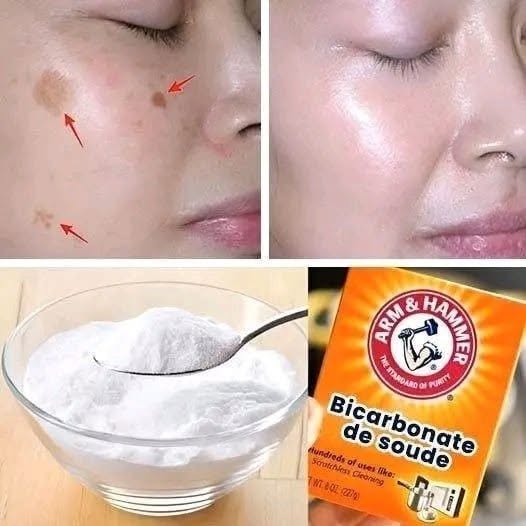
Your skin is naturally slightly acidic, which helps protect it. Baking soda is strongly alkaline, so applying it can disrupt that barrier. This often leads to dryness, irritation, redness, breakouts, and in some cases can make dark spots or uneven tone worse—not better.
For dark spots: baking soda doesn’t safely fade pigmentation. Dark spots usually come from sun exposure, acne marks, or hormonal changes. What actually helps is consistent sunscreen use, gentle exfoliation (like mild AHAs), and ingredients such as vitamin C or niacinamide that are designed for pigmentation over time.
For wrinkles: baking soda cannot “remove” wrinkles. Wrinkles are mainly related to collagen loss and sun damage. Proven approaches include daily sunscreen, moisturizers with retinol (vitamin A derivatives), and good hydration. These work gradually but actually target the cause.
For dark circles: these are often caused by genetics, lack of sleep, thin skin under the eyes, allergies, or pigmentation. Baking soda won’t help here and can easily irritate the delicate under-eye area. Caffeine eye creams, adequate sleep, hydration, and treating allergies are more effective approaches depending on the cause.
If you still see DIY recipes online using baking soda masks, it’s better to avoid them on the face entirely. At best they do nothing; at worst they damage the skin barrier and make discoloration more noticeable.
If you want, I can suggest a simple, low-cost skincare routine tailored specifically for dark spots, wrinkles, or dark circles using safer and actually effective ingredients.