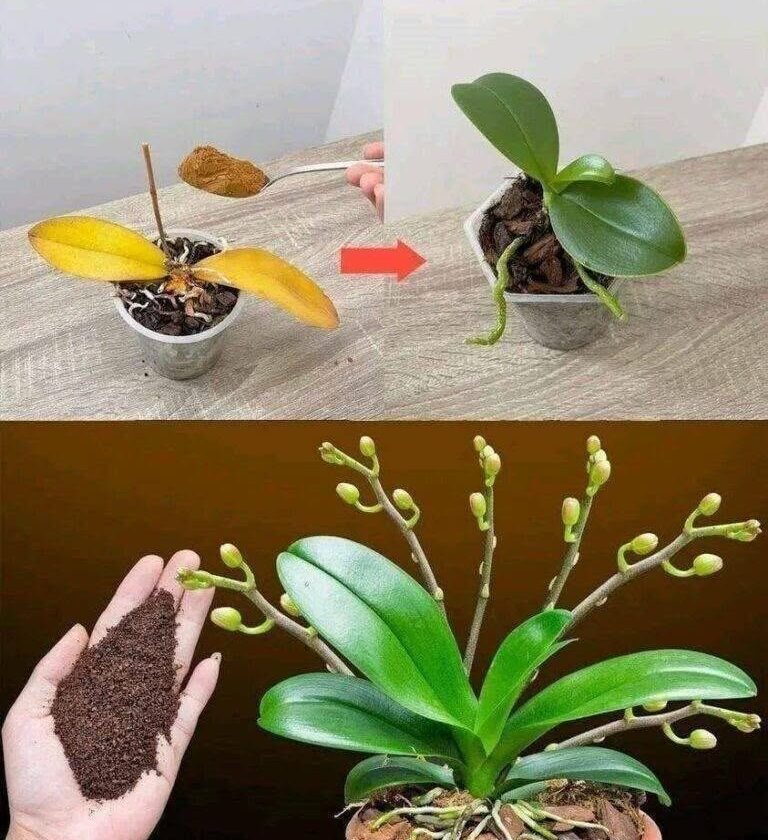
Orchids—especially common house types like Phalaenopsis orchid—don’t respond to a single spoonful of anything with instant flowering. Blooming is a slow biological process controlled by light, temperature cycles, plant maturity, and overall health, not quick kitchen hacks.
What usually sits behind these stories is one of a few things:
- The plant was already healthy and about to bloom anyway
- A change in light or temperature happened at the same time
- The “before/after” timing is exaggerated or staged
- Or the plant was simply responding to long-term care improvements, not the teaspoon itself
For real, reliable blooming in orchids, what actually works is consistent conditions over time:
- Bright, indirect light (this is the biggest factor)
- A small temperature drop at night to trigger flowering
- Proper watering (not overwatering—roots need air)
- Occasional balanced orchid fertilizer in weak doses
- Enough time after the last bloom cycle to recharge energy
Orchids also follow natural bloom cycles. Even perfectly cared-for plants don’t bloom constantly, and forcing them with random additives can sometimes do more harm than good.
So the honest answer: there is no “magic teaspoon.” But there are predictable conditions that reliably trigger blooms when the plant is ready.
If you want, I can break down exactly how to force a stubborn orchid back into bloom step-by-step based on where you keep it (light, room temperature, etc.).