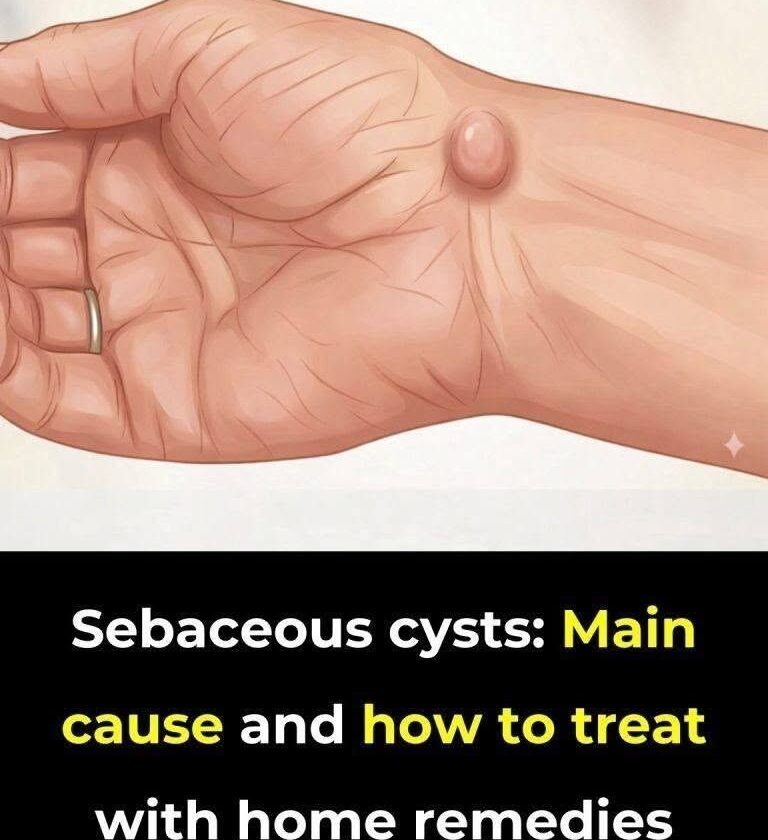
Sebaceous cysts explained: Main causes and what you can doThe term “sebaceous cyst” is commonly used for lumps under the skin, but many of these are actually epidermoid cysts. They are usually benign (non-cancerous) sacs under the skin filled with keratin (a protein found in skin), not true oil-filled sebaceous gland cysts.
Common causes
Sebaceous/epidermoid cysts may develop because of:
- Blocked skin pores or hair follicles
- Skin trauma or irritation
- Inflammation around a hair follicle
- A buildup of skin cells trapped under the surface
- Certain genetic conditions that make cysts more likely
They often appear on the:
- Face
- Neck
- Back
- Scalp
- Trunk
- Genital area
Home care that may help
For a small, painless cyst:
✅ Warm compress
- Apply a warm, damp cloth for about 10–15 minutes several times a day.
- This may reduce discomfort and encourage natural drainage in some cases.
✅ Keep the area clean
- Wash gently with mild soap and water.
- Avoid squeezing or repeatedly touching it.
✅ Avoid popping it
- Trying to squeeze a cyst can push material deeper, increase inflammation, and raise the risk of infection or scarring.
What does not reliably remove a cyst
Home remedies such as:
- Apple cider vinegar
- Garlic
- Essential oils
- “Detox” treatments
have not been proven to dissolve cysts and may irritate the skin.
When to see a healthcare professional
Get medical advice if the cyst:
- Becomes painful, red, swollen, or warm
- Starts draining foul-smelling fluid
- Grows quickly
- Keeps coming back
- Is located in a sensitive area
- Is causing concern about what it is
A healthcare professional can remove a cyst if needed, usually through a minor procedure that removes the cyst wall to reduce the chance of recurrence.
Bottom line: Most small, uncomplicated cysts are harmless and can be monitored. Warm compresses may help comfort, but the only reliable way to permanently remove a cyst is usually professional removal of the entire cyst sac.